Amazon Tests New Rapid Delivery Hub in Seattle

Amazon is piloting a new rapid delivery concept at a shuttered retail site in Seattle’s Ballard neighborhood. The project, dubbed ‘ZST4,’ involves a store-like delivery hub staffed by Amazon employees to fulfill online orders, with Amazon Flex drivers delivering packages within the surrounding area. The operation, designed to resemble a convenience store, will utilize a continuous flow, with drivers scanning in, retrieving packaged orders, and departing within roughly two minutes. The 24-hour, seven-day-a-week facility will stock ‘essential items and local products that are in-demand and hyper-focused on the needs of local customers.’

The hub, previously operated as an Amazon Fresh Pickup location, will be staffed by four shifts of six to eight employees, aiming to dispatch approximately 240 vehicles over a 24-hour period. This pilot aims to test the profitability of rapid delivery models, addressing challenges faced by previous initiatives like ‘Amazon Today,’ which struggled with high per-delivery costs due to small order sizes. The project’s success could set a template for regulating ‘dark stores’ in urban areas.

Amazon Reaffirms Commitment to Seattle Region Despite Changes

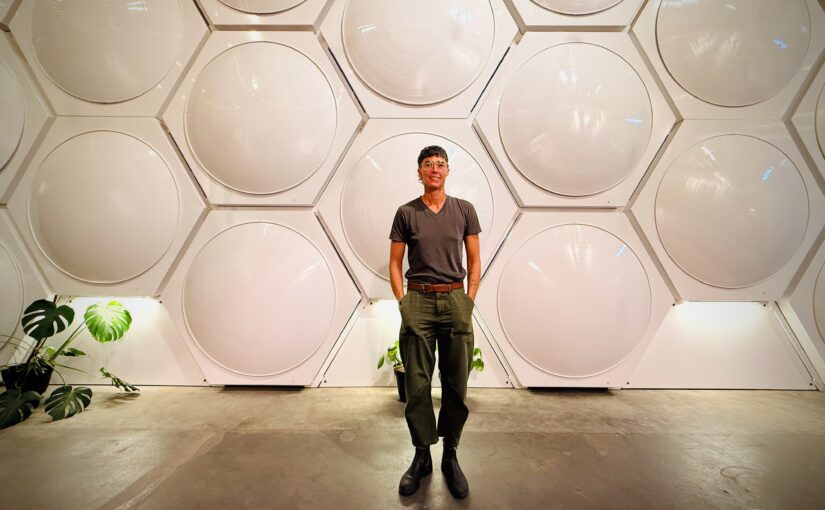
Following the election of a new mayor in Seattle, one of Amazon’s top executives reaffirmed its commitment to the region Tuesday, promising, “We are not going anywhere.” David Zapolsky, Amazon chief global affairs and legal officer, made the comment during an Amazon Community Impact Reception at The Spheres in Seattle, where he and others discussed the company’s philanthropic and civic initiatives from housing to food security.

“Obviously, this is a time of change, both in this region and around the world,” Zapolsky said. “Amazon remains committed to our home, this Puget Sound region. We are not going anywhere. And so we remain committed to building this community.”

It’s a rare public reaffirmation of the Seattle region as Amazon’s primary base. It follows years of political disputes over taxes and other city policies that contributed to Amazon shifting more of its workforce to Bellevue, Wash., and Northern Virginia.

With the arrival of Seattle Mayor-elect Katie Wilson, Amazon must once again establish a working relationship with a city leader who ran on promises to address issues such as affordability, brought about in part by a tech boom that Amazon helped fuel.

Wilson defeated Mayor Bruce Harrell, a more business friendly leader than Amazon was used to dealing with during the tech giant’s strained relations with City Hall. “I’ve tried to have a very supportive relationship, but also one on mutual accountability,” Harrell told GeekWire in January about his dealings with Amazon. “I think it’s working out well.”

During her campaign in September, Wilson told GeekWire that she aims to work with the tech sector and Amazon on innovative solutions to civic challenges.

A longtime community organizer and Transit Riders Union co-founder, Wilson helped design and pass Seattle’s controversial JumpStart payroll expense tax in 2020. A majority of the revenue — $360 million in 2024 — is generated from 10 companies, including Amazon. “Obviously Amazon and the other big tech companies are very important players in our city and in our economy, and so I think it’s very important that the city has working relationships there,” she said.

In the same election that ushered in Wilson, voters also overwhelmingly approved Proposition 2, a plan hatched by Harrell and City Councilmember Alexis Mercedes Rinck that will reshape the city’s business and occupation (B&O) tax that applies to gross revenue. It will impact both small startups and large tech companies such as Amazon.

According to public records, Zapolsky gave $550 to Harrell’s re-election campaign. Amazon HR chief Beth Galetti ($650) and Amazon Stores CEO Doug Herrington ($550) are among others from Amazon who contributed.

During Tuesday’s event at The Spheres, Amazon spotlighted its philanthropic efforts and the progress being made across the region, including:

Zapolsky said Amazon’s community strategy shifted as the company rapidly expanded in Seattle. He said employees and leaders have always cared about their community, but the company’s efforts were informal and relatively small-scale in its earlier days. By 2009 and 2010, Amazon had grown far faster than expected and “we were sort of backing into the scale that we have in the city,” Zapolsky said — prompting company leaders to recognize the need for a more organized approach.

From there, he said, Amazon began applying its core business principles to civic work: taking a long-term view, listening to partners to understand what the community actually needs, and focusing on where Amazon’s unique capabilities — logistics, technology, legal expertise — could make the biggest impact, rather than just financial contributions.“We’re still in the middle of the journey,” Zapolsky said.

Amazon counts more than 80,000 full- and part-time employees in the Puget Sound region. About 50,000 corporate and tech workers are in Seattle— a number that shrunk from about 60,000 in 2020 as more jobs shifted to Bellevue. The company cut 14,000 workers in broad layoffs in October, with 2,303 corporate employees in Washington state.

Zapolsky, who has been at Amazon 26 years, called his move from New York to Seattle 32 years ago the best decision he ever made. He cited the city’s amazing assets, from its people and diversity to its infrastructure improvements including the waterfront, convention center, and Climate Pledge Arena.“Even government when it tries can’t screw this up,” he said, adding, again, “We’re here to stay. We want to continue working with our partners in the community, continue making the Puget Sound region better for our community and for our employees.”
Seattle’s Hardware Heartbreak: A Recurring Pattern of High Hopes and Hard Landings

Editor’s Note: GeekWire co-founders Todd Bishop and John Cook created this column by recording themselves discussing the topic, asking AI to draft a piece based on their conversation, and then reviewing and editing the copy before publishing. Listen to the raw audio below.

If we look out GeekWire’s office window right now, down at Seattle’s Burke-Gilman Trail, we can practically guarantee one thing: if we wait 5 minutes, at least one Rad Power Bike will zip past. Probably more. They are ubiquitous — the “Tesla of e-bikes” that seemed to redefine urban transport during the pandemic.

But that physical prominence masks a brutal business reality. In the last few weeks, the Seattle tech scene has been rocked by two stories that feel like different verses of the same sad song, as documented by GeekWire reporter Kurt Schlosser. First, Glowforge — the maker of high-end 3D laser printers — went into receivership and was restructured. Then came the news that Rad Power Bikes might be forced to close entirely.

We’ve each covered the Seattle region’s tech ecosystem for around 25 years, and if there is one enduring truth in the Pacific Northwest, it is that hardware is not only hard, as the old saying goes, but for some reason it seems harder here.

It is naturally harder to manipulate atoms than digits. If Windows has a bug, Microsoft pushes an update. If a Rad Power Bike has a busted tire or a faulty component, you can’t fix it with a line of code. You need a supply chain, a mechanic, and a physical presence.

But the struggles of Rad and Glowforge go beyond the physical manufacturing challenges. They are victims of two specific traps: the quirks of the pandemic and the curse of too much capital.

Both companies were born before the pandemic, but they boomed during it. When the world locked down, the thesis for both companies looked invincible. We were all sitting at home in our PJs, desperate for a hobby — so why not buy a Glowforge and laser-print trinkets? We were wary of public transit and looking for recreation — so why not buy an e-bike?

Many tech companies, including giants like Amazon and Zoom, bet big that these behavioral changes were permanent. They weren’t. And we are seeing some of the indigestion of that period play out with massive layoffs at tech companies that got too big, too fast during the pandemic years. The world went back to normal, or at least found a new normal, but in the meantime these companies had scaled for a reality that no longer exists.

Then there is the money. In 2021, Rad Power Bikes raised over $300 million. When you raise that kind of cash, you are no longer allowed to be a nice, profitable niche business. You have to be a platform. You have to be a world-changer. Rad tried to build a massive ecosystem, including direct-to-consumer retail stores and mobile service vans to fix bikes in people’s driveways.

Building a physical service network is agonizingly expensive. Had they raised less and stayed focused on being a great bike maker, we might be having a different conversation. But venture capital demands a “Tesla-sized” outcome, and that pressure can crush a consumer hardware company.

History tells us we shouldn’t be surprised. Seattle has a painful relationship with consumer hardware. We’ve got one word for you: Zune. Or how about the Fire Phone? Or Vicis, the high-tech football helmet maker that crashed and burned. For those with long memories, the current situation rhymes with the saga of Terabeam in the early 2000s. They raised over $500 million to beam internet data through the air using lasers. It was a B2B play, not consumer, but the pattern was identical: massive hype, massive capital, and a technology that was difficult to deploy in the real world. They eventually sold for a fraction of what they raised.

We still love seeing those bikes on the Burke-Gilman. But in this economy, with inflation squeezing discretionary spending, $1,500 e-bikes and $4,000 laser printers are a tough sell.

Seattle may be the cloud capital of the world, but when it comes to consumer hardware, we’re still learning that you can’t just download a profit margin.

Washington State Sees EV Demand Surge Amid Rebate Deadline

Seattle is experiencing a surge in electric vehicle sales as the federal tax credits for EVs expire, creating a sense of urgency among consumers. Rachel Walen, sales manager at a local Hyundai dealership, reports a busy weekend, attributing the increased interest to a last-minute push to secure specific vehicle configurations before the deadline. August sales of new EVs in the U.S. jumped nearly 18% compared to the previous year, while used EV purchases spiked 59%, reaching 10% of all new vehicle sales – a U.S. record.

Despite the federal incentives disappearing on September 30th, Washington State is stepping in with initiatives like ZEVergreen, aimed at further promoting zero-emission vehicles. The state’s efforts are bolstered by a history of aggressive climate goals, including a law mandating all new vehicles sold starting in 2035 to be zero-emission. Washington’s commitment extends to fighting federal efforts to nullify California’s stricter vehicle emissions standards.

A significant factor driving the demand is the loophole regarding EV leases, which saw no income restrictions. As tax credits for buyers expired, a wave of 3-year-old used EVs is anticipated to hit the market as leases expire. While some forecasts predict lower EV sales in the U.S. due to recent policy changes, global EV sales are expected to increase by 24% this year, largely driven by China. Despite these fluctuations, research indicates that a large percentage of current EV owners intend to remain electric for their next vehicle purchase.

Human Composting: A Rising Trend in Death Care

Nestled on a quiet street south of Seattle, Recompose stands out – a vibrant building boasting a lush garden and colorful mural. This innovative company is pioneering a new approach to death care: human composting, also known as natural organic reduction.

Five years after Washington became the first state to legalize this process, spearheaded by founder and CEO Katrina Spade, 13 other states have followed suit. Recompose is now looking to expand its operations beyond Seattle, potentially through franchising.

The company’s facility, resembling a successful tech startup with elements like live-edge wood and preserved greenery, offers a calming space for families. It includes dedicated areas for quiet reflection and larger memorial services, centered around a ‘threshold vessel.’

Recompose provides an alternative to traditional burial and cremation, competing with services like Earth Funeral and Return Home. The company has already served over 600 individuals, with approximately 20% coming from outside Washington state. A ‘Precompose’ program allows people to save for the $7,000 expense, currently boasting over 2,000 participants.

The composting process itself, overseen by 17 employees and regulated by three agencies, transforms remains into reusable soil within approximately 30 days. This process uses organic matter like straw, wood chips, and alfalfa to complete the conversion.

“Death care is such emotion-heavy work,” Spade stated. “We like to remind the team composting takes time. It’s a very natural process when we receive a person’s body here, there’s just no rush to get something done quickly — which is nice.”

Seattle’s Tech Scene Faces Uncertainty: Layoffs, Startup Opportunities, and the Rise of AI

Seattle’s tech scene is navigating a period of significant change. A recent Wall Street Journal report highlights concerning trends, including layoffs at major companies like Amazon and Microsoft, as well as broader economic challenges impacting the region. The story features a striking observation: former tech workers are applying for barista positions near Microsoft’s headquarters, reflecting a wider shift in the local economy.

Several factors contribute to this uncertainty. Decreased retail spending in tech-heavy districts, restaurant closures, a cooling housing market, and rising commercial real estate vacancies paint a picture of a region grappling with reduced demand. Furthermore, a decline in payroll and sales tax revenue has led to a projected $146 million budget deficit for the city.

Amazon CEO Andy Jassy’s prediction of workforce shrinkage due to AI efficiencies adds another layer of concern. Despite the AI boom’s positive impact on stock prices, the tech giants are cutting jobs and curbing hiring.

However, this disruption may present opportunities for entrepreneurs. Layoffs are impacting the startup ecosystem – companies like Rec Room, Glowforge, and LevelTen Energy have reduced staff. Tech community leaders are noting a stronger talent pool with less competition from larger tech firms, fueling the creation of new startups.

Investment in Pacific Northwest startups has increased, nearly doubling through the first eight months of 2024 compared to 2024, according to GeekWire’s funding tracker. While the scale of AI hiring booms may not return, Seattle’s transformation into a hub for startup creation is underway.

Srini Gopalan Takes the Helm at T-Mobile: A New Chapter for the Un-carrier

Srini Gopalan is stepping into the CEO role at T-Mobile, succeeding Mike Sievert after nearly six years at the helm. The announcement, made Monday, sees Gopalan taking on the CEO position, while Sievert transitions to a role as Vice Chairman and member of the board, continuing to advise on strategic initiatives.

Gopalan, previously T-Mobile’s Chief Operating Officer since 2023, brings a wealth of experience from leading Deutsche Telekom’s Germany business, where he oversaw substantial growth and network expansion. Prior to T-Mobile, he held senior positions at Vodafone, Bharti Airtel, and Capital One.

T-Mobile’s transformation under Sievert’s leadership, often dubbed the ‘Un-carrier’ strategy, has seen the company rise to become the largest U.S. telecom provider. This shift, built on lower prices, network improvements, and customer-centric perks, was initially sparked by John Legere.

Gopalan emphasized T-Mobile’s position to lead in 5G and future technologies like 6G, citing the company’s early deployment of a 5G standalone core, significant spectrum holdings, and technical advantages.

He highlighted the company’s recent success, including its “greatest Q2 ever” and “greatest year of growth ever,” underpinned by a record-breaking “biggest iPhone weekend.” Gopalan’s vision focuses on leveraging advanced technology, particularly AI and automation, to simplify customer experiences and further ‘truly unleash the Un-carrier’ strategy.”

Class-Action Lawsuit Targets Zillow’s Agent Referral Program

A new class-action lawsuit alleges that Zillow unfairly inflated home buying costs through its Zillow Flex agent referral program. The suit, filed by Hagens Berman and Cohen Milstein, claims Zillow knowingly allowed agents to collect up to 40% commissions, often undisclosed to buyers and sellers. This practice, critics argue, created a deceptive system where Zillow capitalized on a dominant position in online real estate search, manipulating the market to maximize profits.

The complaint highlights concerns about the program’s incentives, where agents prioritized securing full commissions through the referral program, even if it meant reduced commissions for themselves. This resulted in increased purchase prices for buyers, as the buyer’s Flex agent received a significantly smaller portion of the commission.

Key accusations include Zillow’s deceptive practices when buyers clicked the “Contact Agent” button, leading them to Zillow-affiliated agents rather than direct sellers. Additionally, the suit criticizes Zillow’s Listing Access Standards, arguing they were strategically implemented to force listings onto Zillow.com, further benefiting the company’s revenue stream. The lawsuit alleges this created an unfair advantage, manipulating the market to inflate Zillow’s profits.

The class-action lawsuit seeks compensation for U.S. buyers who purchased homes listed on Zillow within the last four years using agents referred through the platform. The suit also cites violations of the Washington Consumer Protection Act and the federal Real Estate Settlement Procedures Act (RESPA), seeking a jury trial and triple damages.