Zap Energy Achieves Record Pressure in Fusion Device, Paving the Way for Limitless Clean Power

Zap Energy has announced a significant breakthrough in its fusion research, successfully generating a pressure roughly 10,000 times that of atmospheric pressure at sea level – equivalent to the extreme conditions found at the bottom of the Pacific Ocean’s Mariana Trench. This achievement, accomplished by their FuZE-3 device, represents a key validation of their approach to harnessing fusion energy.

‘This is a proof of principle that was designed to hit a particular set of milestones and to validate the principle, and it did that with flying colors,’ said Ben Levitt, Zap’s head of R&D. The company, based in Everett, Washington, is racing to replicate the reactions that power the sun, aiming to create a sustainable and abundant source of clean energy.

Zap’s technology utilizes a high-current plasma, creating a magnetic field – a Z-pinch – to contain and compress the matter, reaching the record-breaking 1.6 gigapascal pressure. The success was achieved by splitting one of the electrodes in the fusion generator, providing the machine with a new mechanism to increase plasma compression. While this milestone represents ‘great progress,’ Levitt emphasized that substantial further development is required to achieve sustained energy production.

‘We’re not waving our flag and resting on our laurels,’ Levitt stated. Scientific breakeven – producing more energy from the fusion reaction than is put in – is a potential goal by the end of the decade, though the progress is expected to be punctuated by significant leaps forward.

Zap’s advancements come as part of the U.S. Department of Energy’s Milestone-Based Fusion Development Program, for which the company received $330 million in investment and is ranked among the top startups in the Pacific Northwest. The company plans to continue its research and development efforts, aiming to unlock the potential of fusion energy for a future powered by clean, limitless resources.

Investing in the Builders of Tomorrow: Amazon Leo’s Workforce Development with Lake Washington Institute of Technology

It’s 2025, and a Wi-Fi enabled egg tray exists. (Yes, seriously.) It monitors freshness and suggests which eggs to cook first. Humans have managed to connect nearly every home object to the Internet, yet a third of the global population still lives in places with no mobile-broadband coverage. A lack of infrastructure and investment has left people in rural and underserved communities behind, while the rest of the world orders groceries from their smart fridges. Amazon Leo is working to close the digital divide by developing a low Earth orbit satellite broadband network that delivers reliable internet to people worldwide. The team tackling this massive technical and aerospace manufacturing challenge is headquartered in Greater Seattle. And this home base is intentional, as Greater Seattle is the largest aerospace supply chain hub in the United States. Such a gargantuan effort requires armies of talented people, an investment Amazon is prioritizing through a Amazon Leo workforce development partnership with Lake Washington Institute of Technology and an internal upskilling program. For Washingtonians, this offers an exciting pipeline into a career beyond the stars.

Amazon Leo isn’t just about building satellites. It’s also about the massive scale at which those satellites are being built, which is a volume of precision manufacturing that’s unprecedented in space tech. The proof is in the numbers: Washington state is projected to manufacture more than 75% of the world’s satellites in the near future, according to Brian Huseman, Amazon’s Vice President of Public Policy. Kuiper’s Greater Seattle facilities are blending aerospace rigor with consumer-tech speed. These technical feats are made possible by the fresh workforce Amazon is powering: a talent pool of agile, cross-trained people who are comfortable operating at the intersection of hardware and digital manufacturing systems. And no, these talented people aren’t all plucked from cookie cutter engineering degree programs. They’re CDL drivers, warehousing specialists, and customer service representatives. They bring nontraditional backgrounds and real-world experience to the table. This is the secret sauce powering Amazon Leo’s groundbreaking innovation.

The skill-building magic happens at Lake Washington Institute of Technology, the only public institute of technology in the state. Amazon’s partnership with LWTech launched in 2024 to address the need for skilled technicians to staff a new Kirkland facility. “When Amazon Leo approached us, the single biggest thing they said is: we’re getting a lot of people who can run computerized software, but we are not finding people who can turn a wrench or do precision assembling. So, all our activities and tools are designed to support what is currently happening in the industry,” said Priyanka Pant, Dean of Instruction.

Priyanka is one person in a star-studded team of industry wizards who made the satellite technician training certification program and Amazon Leo workforce development come to life. Usama Al Mandalawi, an Engineering Manager with 15 years of aerospace experience, helped Priyanka co-design the curriculum alongside the Amazon Leo team, Blue Origin, and other industry strongholds. Together, they ensured their certificate program met precision manufacturing needs and positioned students for lucrative jobs right out the graduation gates. Both Priyanka and Usama have worked hard to ensure the classroom and lab are close replicas to actual Kuiper work environments utilizing aerospace grade projects, materials, and tools. Thanks to a donation from Amazon, students use the same tools they can expect to use on the job. And this isn’t the only highlight of the program. “We are preparing students not only to learn technical skills but also how to be an excellent employee, how to show up on time, how to be an over-communicator and how to write down the assembly instruction from A to Z without skipping any steps,” Usama said. He also brings in real life case studies for students to problem solve. “Every new student cohort gets real examples of cases that they examine and learn how to deal with. We also have technicians and managers coming in from Kuiper to talk about their day jobs, opportunities, and future outlooks. This shows our students the near and long term future within the satellite industry.”

The focus on technical and soft skills is just one aspect of the unique certification program LWTech is delivering. “One of the biggest things we worked on was to remove any barriers. The prerequisites were kept to a minimum. That way, anyone who has an interest in technology, likes working with their hands, or has an eye for precision can join this program and learn from us. This method of improving access was how we made it accessible for all students, whether they were nontraditional, underrepresented, or used English as a second language, all people with diverse lifestyles can come to us,” Priyanka said. LWTech’s commitment to removing barriers runs deep: they’ve provided numerous scholarships, selected class times that align with students’ schedules, and even developed a textbook rental library to ease students’ financial burden.

LWTech already has its sights set on the future: they’re reinforcing their status as a workforce ready campus by creating a pipeline that will introduce students to the world of opportunity available to them within Amazon satellite manufacturing. That combined with their plans to develop additional training means they’re truly championing Washington state’s ever-growing aerospace industry. Usama knows full well the power of the sharp minds in LWTech’s classrooms. “They’re going to be the mentors for new generations in Washington state, and that’s how we’ll continue to grow as the aerospace hub.” Amazon’s Career Choice program mirrors LWTech’s commitment to inclusivity as it’s specifically designed to welcome people from all walks of life into high-tech careers. It’s shaping precision manufacturing roles by developing top aerospace talent from within its own front-line workforce. Hourly fulfillment center employees are trained to become satellite technicians through a six-month certification program covering fiber optics, avionics wiring, electronics manufacturing, aerospace assembly, and more. This upskilling initiative preserves the U.S. as a leader in space-based technologies and gives Amazon that lucrative speed to launch that’s defined the industry. Nadine Finegold graduated from Career Choice and became Kuiper’s first hire from the program. The mental fortitude, teamwork, and laser-focus she learned during her time in warehousing served as the foundation she now uses to build panels that launch into space. “At first, I was intimidated by people in the program with engineering backgrounds because I didn’t have any of that. I just studied really hard and learned along the way. It takes help from others and consistent outreach to make sure you don’t let homework or anything else slide,” Nadine said. “If you can make it in the warehouse, you can make it here. Hard work and perseverance, you’ve got to have a real strong mindset.” “The number one focus is precision. These panels are going up in space, and you have to be precise. Everything requires a double and triple check. And you’ve got to work as a team, and the warehouse prepared me for that.” Nadine said. Her story is a testament to how coming from a nontraditional background is a unique advantage. The knowledge, skills, and grit she earned on her nonlinear path all proved to be vital ingredients for the future-shaping work Amazon Leo is doing. For a company redefining what’s possible beyond the stars, it makes sense that top performers are multihyphenate achievers who bring a wealth of diverse experience to the table.

The Greater Seattle aerospace hub celebrates its uncommon thinkers by carving out pathways that welcome everyone to the table. Amazon Leo’s talent strategy of embracing diverse skills and experiences is paying dividends; not just for putting Washington on the map as a leading satellite manufacturing hub, but also for giving the people powering it liveable wages and lucrative careers. Amazon Leo’s partnership with LWTech points to broader workforce trends: people are re-skilling and upskilling for emerging industries, and employers are valuing curiosity over conventional credentials. This is the future of collaboration between industry and education: and Washington’s aerospace industry is building the modern blueprint.”

Real Revenue, Actual Value, and a Little Froth: Read AI CEO David Shim on the Emerging AI Economy

[Editor’s Note: Agents of Transformation is an independent GeekWire series and 2026 event, underwritten by Accenture, exploring the people, companies, and ideas behind the rise of AI agents.]

What separates the dot-com bubble from today’s AI boom? For serial entrepreneur David Shim, it’s two things the early internet never had at scale: real business models and customers willing to pay. People used the early internet because it was free and subsidized by incentives like gift certificates and free shipping. Today, he said, companies and consumers are paying real money and finding actual value in AI tools that are scaling to tens of millions in revenue within months.

But the Read AI co-founder and CEO, who has built and led companies through multiple tech cycles over the past 25 years, doesn’t dismiss the notion of an AI bubble entirely. Shim pointed to the speculative ‘edges’ of the industry, where some companies are securing massive valuations despite having no product and no revenue — a phenomenon he described as ‘100% bubbly.’

He also cited AMD’s deal with OpenAI — in which the chipmaker offered stock incentives tied to a large chip purchase — as another example of froth at the margins. The arrangement had ‘a little bit’ of a 2000-era feel of trading, bartering and unusual financial engineering that briefly boosted AMD’s stock.

But even that, in his view, is more of an outlier than a systemic warning sign. “I think it’s a bubble, but I don’t think it’s going to burst anytime soon,” Shim said. “And so I think it’s going to be more of a slow release at the end of the day.”

Shim, who was named CEO of the Year at this year’s GeekWire Awards, previously led Foursquare and sold the startup Placed to Snap. He now leads Read AI, which has raised more than $80 million and landed major enterprise customers for its cross-platform AI meeting assistant and productivity tools.

They spoke about AI, productivity, and the future of work at a recent dinner event hosted in partnership with Accenture, in conjunction with GeekWire’s new “Agents of Transformation” editorial series. We’re featuring the discussion on this episode of the GeekWire Podcast. Listen above, and subscribe to GeekWire in Apple Podcasts, Spotify, or wherever you listen.

Successful AI agents solve specific problems: The most effective AI implementations will be invisible infrastructure focused on particular tasks, not broad all-purpose assistants. The term ‘agents’ itself will fade into the background as the technology matures and becomes more integrated.

Human psychology is shaping AI deployment: Internally, ReadAI is testing an AI assistant named ‘Ada’ that schedules meetings by learning users’ communication patterns and priorities. It works so quickly, he said, that Read AI is building delays into its responses, after finding that quick replies ‘freak people out,’ making them think their messages didn’t get a careful read.

Global adoption is happening without traditional localization: Read AI captured 1% of Colombia’s population without local staff or employees, demonstrating AI’s ability to scale internationally in ways previous technologies couldn’t.

‘Multiplayer AI’ will unlock more value: Shim says an AI’s value is limited when it only knows one person’s data. He believes one key is connecting AI across entire teams, to answer questions by pulling information from a colleague’s work, including meetings you didn’t attend and files you’ve never seen.

‘Digital Twins’ are the next, controversial frontier: Shim predicts a future in which a departed employee can be ‘resurrected’ from their work data, allowing companies to query that person’s institutional knowledge. The idea sounds controversial and ‘a little bit scary,’ he said, but it could be invaluable for answering questions that only the former employee would have known.

The Rise and Fall of Rad Power Bikes: From Breakout Success to the Brink of Shutdown

What happened to Rad Power Bikes? That’s the question on many minds in Seattle and beyond after the startup revealed Monday it is facing a potential shutdown due to “significant financial challenges.” Rad started as a scrappy hardware startup and grew into the largest e-bike seller in North America. The company’s co-founders won Young Entrepreneur of the Year honors at the GeekWire Awards. Rad raised more than $300 million in 2021 and hit a $1.65 billion valuation — a rare unicorn in Seattle.

But a series of missteps and macroeconomic challenges led to more than seven rounds of layoffs and a remarkable downfall. Rad said it could shut down as soon as January. “We are still exploring every viable option to preserve the brand and the community that helped build it,” the company said in a statement to GeekWire.

During a ride along the Burke-Gilman Trail in Seattle this week, we met John Ward, who was cruising on his Rad City electric bike. “It’s a bummer,” Ward said of the hometown company’s struggles. “I’m 76 and I don’t like climbing up the hills anymore, and I got this Rad bike and I’ve been very happy.” Ward, one of nearly 700,000 Rad riders around the globe, is a longtime cyclist who said he uses the e-bike for regular rides with friends and also trips to the swimming pool, the grocery store and the farmers market. He said he’s concerned that if the company goes out of business it will be tough to get parts or service.

We spoke with former Rad execs, industry experts, bike shop owners, and hardware startup leaders to understand what went wrong at the company. Rad’s story is a case study in what happens when a breakout hardware brand bets its future on a once-in-a-century pandemic demand spike — and then gets hit with a supply chain storm and the realities of venture-backed consumer hardware.

Rad gave customers “that feeling like they were a kid again,” co-founder Ty Collins told GeekWire this week. The company, born from founder Mike Radenbaugh’s teenage tinkering, launched a direct-to-consumer model in 2015 with an e-bike at an approachable price. “They made bicycles accessible to people that may be intimidated going into a bike shop,” said Peter Clancy, business partner at Westside Bicycle in Seattle.

Rad opened up a new “lifestyle” market segment — sub-$2,000 e-bikes for regular people, not hardcore cyclists. “Rad kind of built the e-bike space,” said Justin Taylor, editor at Electric Bike Report. Marty Pluth, general manager at Gregg’s Cycle, remembers commuting over Seattle’s 520 bridge and seeing “a ton of Rad bikes” owned by people in a ski jacket or baggy shorts — a sign the company had unlocked a new kind of customer.

Scrappy and scaling The company’s early team was a ragtag crew doing multiple jobs at once. It was also methodical. “We just really efficiently scaled our spend,” Collins said. Rad quickly found product-market fit after an initial crowdfunding campaign. From there, sales kept booming, from Ballard to Berlin. “We’d sell thousands of bikes in seconds,” Collins said. “We literally couldn’t keep bikes in stock.” The company reported $100 million in revenue in 2019 and landed investment from Darrell Cavens and Mark Vadon, former Zulily and Blue Nile execs. Later that year it inked a delivery partnership with Domino’s. “I see a business with super passionate customers, a cool product, and awesome entrepreneurs,” Vadon told GeekWire that year. “That’s what you want to be investing in.”

Pandemic boost Then the e-bike market exploded as the pandemic hit. People wanted to get outside and have fun. There was also a climate-friendly element. Rad cited a 297% increase in demand in May 2020. COVID brought the classic “is this a blip or a new normal?” dilemma for Rad and many other e-commerce companies experiencing a surge of orders. “The thought was that this was a catalyst in the electric bike boom,” Collins said. No matter what, “we had to make sure that we had inventory for it,” Collins said. “If people wanted to buy bikes, we needed bikes.”

Step on the gas Rad raised more than $300 million from investors in 2021, doubled headcount to more than 600 employees, and bet big on sustained demand. But like many other businesses during the pandemic, Rad dealt with supply chain delays and disruption. The company went to great lengths to meet demand — in mid-2021, it bought 64 containers and chartered its cargo from Asia into a non-traditional port near Seattle. Bike companies over-ordered on long lead times assuming COVID demand would keep going, according to Pluth. But he said the surge slowed dramatically by the summer of 2022. “Prices were driven down, margins were driven down,” Pluth said. “Rad was affected — everybody was.”

As the pandemic demand settled, Rad was saddled with hundreds of millions of dollars of inventory. “We just had too much inventory liability that we couldn’t be flexible,” said Leah Hunkins, a former supply chain leader at Rad. “It’s like walking around with a bowling ball around our ankles and going for a run — you can’t move.” A growth-at-all-costs mindset may have made sense while Rad’s bikes were selling faster than they could be built. But it ended up causing problems down the road as the company started missing revenue expectations. “The only thing we’re probably guilty of is being overly optimistic that Rad was on this trajectory of growth that would never stop,” Hunkins said. Collins, who stepped down in 2021, said the scarcity mindset began to shift once the company started raising outside capital. “When you have more money to spend … it does present a lot more doors that, in theory, could be opened,” he said. “It gives you a lot of keys to a lot of doors.” He added that the “internal secret sauce” to Rad’s success was allowing employees to “take real ownership over the brand and feel like they were really a part of everything.”

New kids on the block At the same time, Rad faced an influx of strong competitors — Lectric, Velotric and others — plus traditional brands finally moving into e-bikes, all slicing off pieces of the pie. As more options arrived — from cheap Amazon imports to higher-end brands — Rad was squeezed in the middle: not the cheapest, not the most premium. “The differentiation of our product got more challenging,” Hunkins said. Ward, the rider on the Burke-Gilman, agreed that a saturated market may have created trouble for Rad. During his short stop to talk to GeekWire, cyclists riding e-bikes from Aventon, Lectric, Emotion, Super 73, Gazelle, Urban Arrow and more passed by on a trail that’s been dominated by Rad in recent years.

Lawsuits, layoffs, recalls The company faced other speed bumps including a wrongful death lawsuit, a lawsuit related to property damage, and the recall of nearly 30,000 units due to a safety issue. More recent online posts about Rad highlight customer service issues. While Rad’s direct-to-consumer strategy was an advantage early (shorter supply chain, bypass bike shops), it carried long-term service obligations. Rad’s scale meant tens of thousands of riders looking for service in markets where independent shops had to juggle labor costs, parts sourcing and warranty expectations on bikes they didn’t sell. “It worked in the beginning, until people started having problems with proprietary parts,” said Matt Thomas, owner of The Polka Dot Jersey bike shop in Seattle. Over time Rad had to stand up its own stores and service network to support hundreds of thousands of bikes in the wild — an expensive, operationally complex layer on top of already thin hardware margins. Rad shut down its mobile services arm in 2022 and cut 100 jobs. Later that year, Radenbaugh stepped down as CEO. Rad pulled out of Europe starting in 2024 and closed some service shops. Meanwhile, the company went through multiple rounds of layoffs under new CEO Phil Molyneux, the former Sony president who stepped down earlier this year. The company is now led by CEO Kathi Lentzsch, who previously ran Bartell Drugs as CEO before the company sold to Rite-Aid in 2020. Hard times for hardware Rad’s challenges reflect broader difficulties facing consumer hardware startups in the post-2022 investment climate. “Hardware success requires patient capital as it will take a long time and money to build an enduring brand,” said Clayton Wood, former CEO of Seattle-based cooking automation startup Picnic. “That capital is very scarce in the last few years.” Wood noted that pre-2022, venture capital focused on creating unicorns, and hardware companies could raise on high valuations because of high price points and gross profits. “In 2022 the game changed, leaving anyone who raised prior with overvalued companies,” he said. It’s easier to pivot in software, he said, but hardware has high production setup and development costs. Amish Patel, managing director at Conduit Venture Labs, a hardware-focused startup studio, also pointed out structural challenges. Patel said consumer hardware companies with unit-margin-based business models face particular challenges. Hardware brands selling $250+ products rely almost entirely on consumer demand and scale, he said, and when margins tighten — with no software, service, or subscription revenue to offset — the business becomes extremely fragile. RELATED: Seattle’s long history of hardware heartbreak: Big raises, high hopes, hard landings

Valve’s Bold Move: New Hardware Projects Challenge Microsoft and Meta

Valve Software is making a significant move back into the hardware market with a new line of Steam Hardware products, posing potential challenges to industry giants like Microsoft and Meta. The strategy includes a new Steam Machine designed for living room play, a high-durability Steam Controller, and the Steam Frame, an all-in-one VR headset.

The Steam Machine, theoretically offering a similar experience to the successful Steam Deck, aims to deliver a powerful computing experience without physical media, running entirely on digital downloads from Steam libraries. Crucially, it’s not a Windows product, aligning with Valve’s long-standing goal of promoting PC gaming on Linux.

Meanwhile, the Steam Frame directly competes with Meta’s Quest VR hardware, offering a comparable standalone VR headset to challenge Meta’s dominance in the VR space. Valve’s approach appears driven by a desire to provide a viable alternative to Meta’s Horizon setup, addressing concerns about data privacy and a centralized user experience.

With the Steam Machine and Steam Frame positioned with affordability in mind, Valve could disrupt several areas within the gaming industry and present consumers with alternatives to Microsoft’s Xbox and Meta’s VR offerings.

Microsoft’s ‘Experience Center One’: A Glimpse into the Future of AI-Driven Transformation

Redmond, Wash. – If AI were a religion, this would probably qualify as a cathedral. On the edge of Microsoft’s headquarters, overlooking Lake Bill amid a stand of evergreens, a new four-story building has emerged as a destination for business and tech decision-makers. Equal parts briefing center, conference hall, and technology showroom, Microsoft’s “Experience Center One” offers a curated glimpse of the future — guided tours through glowing demo rooms where AI manages factory lines, models financial markets, and helps design new drugs.

It’s part of a larger scene playing out across tech. As Microsoft, Google, Amazon and others pour billions into data centers, GPUs, and frontier models, they’re making the case that AI represents not a bubble but a business transformation that’s here to stay. As the new center shows, Microsoft’s pitch isn’t just about off-the-shelf AI models or run-of-the-mill chatbots — it’s about custom agentic systems that act on behalf of workers to complete tasks across a variety of tools and data sources. That idea runs through nearly everything inside the facility, a glass-encased building featuring an elevated garden in a soaring open-air atrium, just across from Microsoft’s new executive offices on its revamped East Campus.

Experience Center One highlights what Microsoft calls “frontier firms” — ambitious companies using AI to push their operations to the edge of what’s possible in their industries. Agentic AI is “fast becoming the next defining chapter of a frontier organization,” said Alysa Taylor, Microsoft chief marketing officer for Commercial Cloud and AI, in an interview.

The underlying message is clear: get on board or risk falling behind, both competitively and financially. A new IDC study, commissioned by Microsoft, finds both opportunity in spending big and risk in not being bold enough. Companies integrating AI across an average of seven business functions are realizing a return on investment of 2.84 times, it says. In contrast, “laggards” are seeing returns of 0.84 times — basically losing money on their initial spend.

The divide extends to revenue, too: 88% of frontier firms report top-line growth from their AI initiatives, compared to just 23% of “laggards,” according to the IDC study.

And hey, somebody has to foot the bill for those multi-billion-dollar AI superfactories. For this second installment in our Agents of Transformation series, GeekWire visited the new Microsoft facility to see first-hand how the company is presenting its vision of the future. Here are some of the takeaways from the sampling of demos we saw.

These are not off-the-shelf solutions. Each demo reflects a custom deployment built with a major customer, showing how AI tools can be tailored to specific business problems. For example, one shows how Microsoft has worked with BlackRock to integrate a custom AI copilot inside the investment firm’s Aladdin platform to help analysts process large volumes of client and market data more efficiently. It helps reduce the manual work of gathering data and points analysts to potential risks sooner than they might have spotted it on their own. As another example of the customization, the system is trained to translate natural language requests into “BQL,” BlackRock’s proprietary programming language.

This deep level of integration tracks with the findings in the IDC report. It found that 58% of “frontier firms” are already relying on custom-built or fine-tuned solutions rather than generic models. This is expected to accelerate, with 70% planning to move toward customized tools in the next two years to better handle their proprietary data and compliance needs. “That’s a trend that we’ve seen even in the low-code movement — taking an out-of-the-box solution, extending it, and customizing it,” said Taylor, the Microsoft commercial CMO.

OpenAI integration remains critical for many Microsoft customers. Another demo focused on Microsoft’s work with Ralph Lauren, showing how the “Ask Ralph” assistant interprets a shopper’s intent and recommends full outfits from available inventory. Like many of the scenarios inside Experience Center One, this experience runs on Microsoft’s Azure OpenAI Service. It’s a reminder that Microsoft’s partnership with OpenAI — renewed and expanded in recent months — is still a key driver of commercial demand for the tech giant, even as both companies increasingly work with other industry partners. Teams of agents are starting to redefine industrial work. The clearest example of this was a digital twin simulation from Mercedes-Benz — essentially a virtual version of a factory that lets engineers anticipate and diagnose issues without stopping real production.

The demo begins with a production alert triggered by a drop in efficiency. In a real plant, tracking down the cause (something as small as a slight angle change in a screw) might take a team of specialists days of sorting through machine logs and sensor data. In Microsoft’s version, a human manager simply asks the system to diagnose what’s causing the problem, through a natural language interface. That question triggers a set of AI agents, each with a specific role: one pulls the right data, another retrieves machine logs, and a third interprets what it all means in plain language. Within about 15 minutes, the system produces a clear explanation of the likely cause and possible fixes, shortcutting a task that could otherwise stretch across most of a week. AI is compressing weeks or months of scientific research into days or hours. A demo focusing on Insilico Medicine’s work with Microsoft showed how AI is starting to significantly collapse the timeline for drug discovery. The process begins with a “digital researcher” that scans huge amounts of public biomedical data to surface promising disease targets. It’s the kind of work that would otherwise take teams of scientists months of reading and analysis. A second system runs simulated chemistry experiments in the cloud, generating and ranking potential molecules that might bind to those targets. These simulations can be completed in a matter of days, or less, replacing weeks or even months of traditional laboratory work. The demo follows a real example: Insilico used this workflow to identify a potential target for a lung disease and design molecules that could affect it. The company then synthesized dozens of these AI-generated compounds in the lab. One of them is now in Phase 2a human trials.

That’s a small sampling of the demos inside Microsoft’s Experience Center One. During our tour, we walked past displays for other major brands, including more iconic U.S. companies, but not everyone was on board to have the media spotlight cast upon their projects. As a condition of access, we agreed to stick to the examples cleared for public release. Of course, the demos are carefully curated, and it remains to be seen how broadly companies will deploy these kinds of systems in their real-world operations. In many ways, the facility is a successor to Microsoft’s longtime Executive Briefing Center and conference facility, which remains in use a short walk away on the Redmond campus. Experience Center One has been in operation for a couple months, hosting delegations of business clients and political dignitaries, including the prime minister of Luxembourg this week. It’s closed to the public, invite-only. Employees can request access to visit. Visitors arrive via a circular drive, with a plaque at the entrance dedicating the building to John Thompson, the former Microsoft board chair who led the search process that resulted in Satya Nadella’s appointment as CEO. There are private briefing suites on the upper floors, and a full cafe on the second. The building also includes a conference center with three auditoriums. But perhaps the most distinct feature is the interactive portal. As they leave the demos, visitors walk through an immersive digital corridor with scenes of nature on the virtual walls. Walking through the tunnel, motion sensors track their movement, causing digital leaves and particles on the wall-sized screens to swirl and flow in their wake. The audio consists of nature sounds (birds, wind, and rustling trees) that were recorded locally in the Redmond and Sammamish area. And in a fittingly Pacific Northwest touch, the visual display is connected to a weather API. If it has been raining outside (as it often has been recently) the digital environment inside the tunnel turns rainy, too. It’s meant to be a final moment of grounding — a programmed moment of Zen to help executives decompress and center themselves as they contemplate the frontier ahead.

Chet Kittleson і його ‘Tin Can’: Нова тенденція для дітей

Редакторська примітка: Ця серія представляє шість «Неозвичайних Мислителів» з регіону Сіетл: винахідників, вчених, технологів та підприємців, які трансформують галузі та сприяють пози змінам у світі. Їх визнають 11 грудня на GeekWire Gala. «Неозвичайних Мислителів» представляє у партнерстві з Greater Seattle Partners.

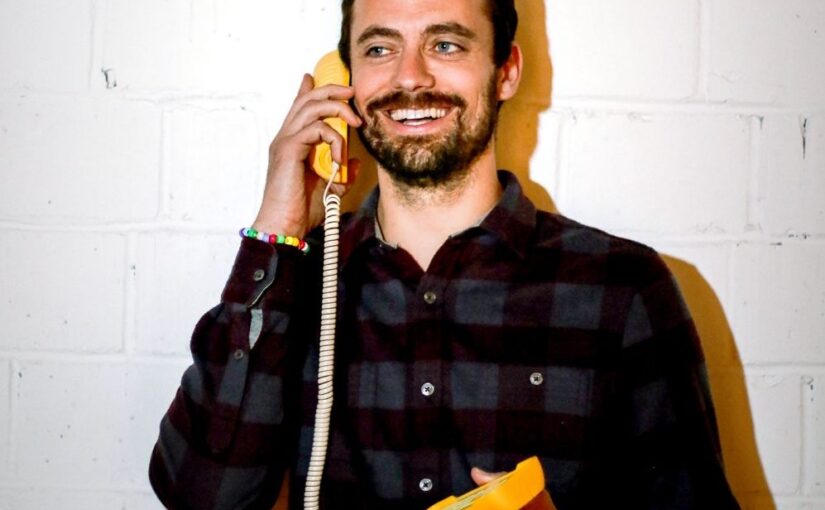
Коли у Чета Кіттлсона лунає дзвінок «Tin Can» у його домі, співзасновнику та генеральному директору стартапу, що робить Wi-Fi-телефони, він відчуває різні емоції. Як батько трьох дітей, він радий, що його діти підключені і що його пристрій дає їм певність, що дзвінок символізує ідею того, що хтось із друзів або бабусі вирішив з ними зателефонувати. І він задоволений тим, що йому не потрібно робити нічого для встановлення зв’язку – телефон дзвонить, двоє дітей обговорюють зустріч. Це дуже зручно.

«І як підприємець кожен дзвінок є нагадуванням, що, мабуть, у нас є продуктовий ринок», – додав Кіттлсон.

Минулого року для Кіттлсона та його співзасновників Graeme Davies і Max Blumen був бурхливим. Всі вони є ветеранами Seattle real estate startup Far Homes, вони випустили кольорові «Tin Can» телефони в аналоговому вигляді, щоб допомогти дітям підключатися один до одного та не зловживати світом екранів, текстових повідомлень і додатків. Стартап зібрав $3,5 мільйона у вересні і проїхав свої перші дві партії продукції. «Tin Can» є у всіх 50 штатах і в Канаді. «Я думаю, насправді ми стали вірусними», – сказав Кіттлсон. «Я дуже вдячний, що це успіх, що це спрацювало. Завжди кажуть: «Ви повинні бути готові входити у палаючі будівлі заради того, що ви робите». І, людино, я б увійшов у палаючу будівлю заради цього».

Ben Gilbert, співзасновником Tin Can-backer Pioneer Square Labs, працював з Кіттлсоном у 2013 році над ідеєю спільного використання автомобілів під назвою Red Ride. Він назвав Кіттлсона одним із унікальних. «Чесно кажучи, коли він запропонував мені ідею мейджефон у 2025 році, я спочатку мусив затамувати дихання», – сказав Гільберт електронною поштою. «Але очевидно, що він зрозумів, що багато батьків були надзвичайно готові і захоплені».

Гільберт сказав, що «Tin Can» — це паліативна справа, яку Кіттлсон би робив, навіть якщо в стартапі є бізнес. «Ми всі краще, якщо в світі у Чета та команди будується «Tin Can» для наших дітей!» — сказав він.

Кіттлсон виріс на самому кінці епохи лінійних телефонів. Він отримав свій перший Nokia «кирпич» телефону, коли йому було 17 або 18 років. Перш за все в його домі був лінійний телефон. «Це було все», — сказав він. «Мій батько покинув мене, коли мені було чотири роки. Це єдиний спосіб, яким я розмовляв зі своїм батьком».

У маленькому містечку Ла Конер, штат Вашингтон, на північ від Сіетла, він дзвонив друзям, поки хтось не відповідав. Якщо він виходив з дому, він дзвонив своїй мамі з телефону друга, щоб сказати, що він там. До середньої школи він пам’ятає, що дзвонив конкретній дівчині, запитуючи її батька, чи вона вдома, а потім заблукав у 30-хвилинній розмові. «Ми в результаті спілкувалися майже як листи. Я відчуваю, що ми ніколи не визнавали це в школі», — сказав Кіттлсон. «Це було весело. Я пережив весь спектр життя з лінійним телефоном».

Під час часу збільшення культурного невдоволення щодо поведінних та проблем зі здоров’ям, спричинених мобільними телефонами та соціальними мережами для дітей, «Tin Can» народився. Багато було сказано про сучасному батьків та дітей, і Кіттлсон посилається на «The Anxious Generation» від Джонатана Хайта та на захисника «диких» дітей Леноре Скеназі.

Може здаватися важким обов’язком будувати апарат, який раптово виправляє цю суспільну ситуацію, але Кіттлсон не вважає це такою проблемою. «Усі ці люди — дослідники, письменники тощо — чудово підготувалися до існування «Tin Can», — сказав Кіттлсон. «Наша точка зору полягає в тому, що життя все ще хороше. Просто потрібно робити вибір, і ми намагаємося запропонувати новий вибір, який може згадати вам про старий».

Кіттлсон і «Tin Can» далеко не антитехнологічні. Він сказав, що все ще занурюється в різні типи технологій. Його захоплення полягає в тому, щоб знайти спосіб використовувати технології для посилення людського зв’язку, а не щоб технології були такими віддаленими. Кіттлсон очікує, що «Tin Can» розширить свій флагманський продукт — телефон — і розширить свій масштаб за межами «ретро-ностальгійно», — сказав він. «Я думаю, що у нас, мабуть, буде комбінація побудови нових речей, які ми думаємо, що можуть допомогти, а можливо, і інші речі, які ми втратили, і які ми можемо відновити».

Кіттлсон сказав, що він ніколи не пережив таку місію, як команда та компанія, які йому вдалося зібрати, і що директор PSL Vivek Ladsariya, який є членом ради директорів «Tin Can», вважає, що ментальність починається згори. Інвестори можуть запитувати під час збору коштів, як штучний інтелект буде інтегрований у «Tin Can», і Ladsariya сказав, що Кіттлсон би розповів їм, що штучного інтелекту не буде, бо це не головна мета компанії. «Він будує «Tin Can», тому що піклується про місію більше за все», — сказав Ladsariya. «Рівень переконання, який він приносить – це заразливий. Люди, яких він наймає, клієнти, інвестори, просто приваблюються ним, тому що він дуже місіонерний. Це справді особливе».

Why the Prime Minister of Luxembourg Sees Amazon as a Strategic Partner

What can Seattle learn about Amazon from Luxembourg? At first glance, there aren’t many similarities between the Pacific Northwest tech hub and the small European nation, a financial powerhouse tucked between France and Germany. But we share a few things in common: a strong space sector, a taste for global innovation — and the outsized presence of Amazon in our local economies. That last one made Luxembourg Prime Minister Luc Frieden’s visit to Seattle this week especially intriguing. Luxembourg is Amazon’s European headquarters, home to more than 4,250 employees, making the company the country’s second-largest private employer, and the four-largest overall. Its workforce in Luxembourg spans Operations, Stores, Devices, and Amazon Web Services, including many of Amazon’s European and international leaders. Illustrating its deep economic footprint in the country of 660,000 people, the tech giant says it invested €1.8 billion in Luxembourg in 2024 alone.

As part of a broader interview with GeekWire during his current West Coast tech tour, the prime minister explained how the country manages the relationship with the tech giant — describing Amazon as “a very good corporate citizen,” and explaining that he views the company as a “strategic partner.” His comments stand in contrast to Amazon’s history in Seattle, where elected leaders have often wrestled with the impact of the company’s growth, and where the tech giant has at times threatened to slow hiring or relocate operations in response to proposed regulations. “We consider Amazon almost to be a Luxembourg company,” Frieden said. “They use all the opportunities that we give to them, and that is my advice for other countries, as well. We are business friendly, we are open, we are stable, [and] we are predictable.”

That business-friendly approach isn’t new for Frieden. The 61-year-old prime minister, who was Luxembourg’s finance and justice minister before spending a decade in private legal practice, returned to lead the country in 2023 on a platform of maintaining Luxembourg’s competitiveness while strengthening its sovereignty. Luxembourg is a parliamentary democracy and constitutional monarchy, and a founding member of the European Union. It’s known for a business-friendly tax environment that has attracted many international companies — making it one of the wealthiest and most connected nations in Europe.

Frieden’s trip was framed in Luxembourg media as a high-stakes working visit to “court leading AI firms” in Seattle and the Bay Area. As reported by RTL Today, the official purpose was to “strengthen economic, technological, and scientific partnerships” with a particular focus on artificial intelligence. As part of his Pacific Northwest tour, Frieden visited companies including Microsoft, Boeing, and Amazon and met with a variety of Seattle tech, business, and venture capital leaders. His visit came as businesses in the Seattle area and Washington state grapple with a slate of new state and local taxes, raising long-term questions about the region’s economic competitiveness. GeekWire spoken with Frieden at a corner table inside Redmond’s Woodblock restaurant, where his motorcade outside prompted some passersby to ask if U.S. immigration forces had descended. Nope, just the prime minister of one of the world’s friendliest nations. But we’re not the only ones curious about the Amazon relationship. Frieden was also questioned about it during an Oct. 7 appearance before the European Parliament in Strasbourg, France. Alex Agius Saliba, a Member of the European Parliament from Malta, asked in his public comments how Frieden could reconcile Luxembourg’s goals for digital sovereignty — ensuring critical data and digital services remain under national or European control — with the fact that Amazon, a U.S. corporation, is such a big employer and a key part of its tech and economic infrastructure. The prime minister didn’t get a chance to address the question during his European Parliament appearance, so we put it to him in our interview. He rejected the idea of a conflict. “No,” Frieden said, “because I think digital sovereignty does not mean that you cut yourself off from the rest of the world. It’s only about having some control over your data, and that is a legitimate goal, I think, for any government, for any region.” Frieden, whose U.S. trip also includes a visit to Silicon Valley, cited Luxembourg’s partnership with Google as an example of how digital sovereignty can be maintained in collaboration with U.S. tech giants. That initiative, called Clarence, is a joint venture between Luxembourg’s LuxConnect and Belgium’s Proximus that provides a sovereign cloud solution for sensitive workloads while using Google Cloud technology. Luxembourg’s financial regulator recently adopted the platform to develop AI applications with full data sovereignty, and Google has also partnered with the University of Luxembourg on research initiatives.

Beyond cloud infrastructure, Frieden addressed one of the most pressing tech policy challenges facing both Europe and the United States: artificial intelligence regulation. On that front, he expressed concern about the U.S. government’s fragmented approach. Europe has its AI Act, while the U.S. has an emerging patchwork of federal initiatives and state laws. “It’s the wrong approach, because AI is by nature global,” Frieden said, arguing that Europe and the U.S. need to get on the same page. “That is why I believe that we have to work with the U.S. as Europeans to make sure that the rules are more or less aligned.” While he considers the EU’s AI Act a more comprehensive attempt to regulate AI, Frieden is among the European leaders pushing for simplification. “Like in many areas of European regulation, it is a little bit too complicated,” he said. “That’s why I am among those heads of state and government who have asked the Commission to simplify the rules.” With tech companies pouring billions of dollars into AI infrastructure, we asked if Frieden is concerned about the risk of a global AI bubble and its potential economic or environmental consequences. Frieden said he focuses on the positive aspects and welcomes the investments. While acknowledging that AI’s environmental impact needs to be managed, he drew a comparison to aviation — another industry he engaged with during his visit to Boeing. Just as the aviation industry works to reduce emissions rather than halting flights, he argued, AI’s side effects can be addressed while allowing the technology to flourish. He compared the current AI revolution to past breakthroughs. “Every few decades there’s a major evolution in mankind, and that evolution always comes due to technology,” he said, citing electricity and the internet as precedents. AI, he said, “will have a huge impact on the way we live together, we work together.” The challenge for political leaders is choosing whether to “support the fear of the people, or whether they encourage people to embrace technological change.” Frieden places himself firmly in the latter camp: “Every technological innovation has brought positive changes to mankind.” The prime minister’s visit also highlighted another Seattle-Luxembourg connection: space. Luxembourg has been a global leader in the field for decades, building on its 40-year history as a satellite hub for companies like SES and Intelsat. The country established the SpaceResources.lu initiative for space mining and recently announced “Project Oasis,” a partnership with Kent-based Blue Origin — the commercial space venture founded by Amazon’s Jeff Bezos — to map lunar resources. Frieden emphasized that Luxembourg’s space, science, and technology initiatives are interconnected, not competing priorities. “We developed three strategies: an AI strategy, a data strategy and a quantum strategy,” he said. “Space is part of some of those strategies as well.” One sign that Luxembourg’s approach might be working? We’ve heard anecdotally that when U.S. tech workers — especially from Amazon — are assigned to Luxembourg from Seattle or the Bay Area, they often don’t want to return. The prime minister attributed this to Luxembourg’s high quality of life, including its safety, its diverse population — half the country’s residents are foreign nationals — and its proximity to major European cities like Paris and Amsterdam. “It’s a very peaceful country,” Frieden said, noting that this combination of factors makes Luxembourg particularly attractive to international tech workers.

Rad Power Bikes Faces Possible Shutdown Amid ‘Significant Financial Challenges’

Seattle-based electric-bike maker Rad Power Bikes, which grew into the leading e-bike seller in North America during the pandemic, is fighting for survival as it faces “significant financial challenges,” the company confirmed on Monday.

Rad filed a Worker Adjustment and Retraining Notification (WARN) with the Washington state Employment Security Department on Friday. A company spokesperson told GeekWire the filing was part of “advance written notice of a potential cessation of operations that could occur as early as January 2026.”

The closure would spell the end of the company and mark a stunning collapse for Rad Power Bikes, which was once Seattle’s highest-profile consumer hardware startup, riding pandemic-era e-bike demand to unicorn status.

According to the WARN filing, a shutdown would impact 64 jobs at Rad’s headquarters location in Seattle’s Ballard neighborhood. Affected positions include the company’s CEO, CFO, multiple director-level roles, customer service reps, and bike mechanics. Rad also operates retail locations in nine cities in the U.S. and Canada.

“No final decisions have been made, and these notices are precautionary,” the Rad spokesperson said. “Rad’s leadership is actively pursuing all viable options to keep the company operating.”

Those options include funding to keep the company moving forward or an acquisition of Rad, which has raised more than $329 million to date. One “very promising deal” was close to completion and appeared likely to close, but did not “come to fruition.”

In a letter to employees (below), the company said that it “did not anticipate the sudden drop in consumer demand from Covid-era peaks” and that in addition it was dealing with challenges “in the form of tariffs and the macroeconomic landscape.”

According to the letter, a collective mantra has emerged at the company: “Save Rad.” For years, the slogan of choice has been “Ride Rad.”

The company is still selling bikes on its website and promoting deals for Black Friday. The filing with the state is in compliance with Washington’s Mini-WARN Act, which went into effect July 27, and “requires employers with 50 or more full-time employees in the state to provide 60 days’ advance written notice for mass layoffs or business closures impacting 50 or more employees.”

Rad was conceived in 2007 by co-founders Mike Radenbaugh and Ty Collins, who met as students at Humboldt State University in Northern California and built their first e-bike together. After years of doing custom conversions of traditional bikes to electric, they launched their company as a direct-to-consumer brand in 2015.

Rad saw big demand amid the pandemic as more people bought e-bikes. Its sales and workforce surged and it raised more than $300 million from investors in 2021. The company was valued at $1.65 billion that year, according to PitchBook, making it one of a handful of “unicorn” startups in the Seattle region at the time.

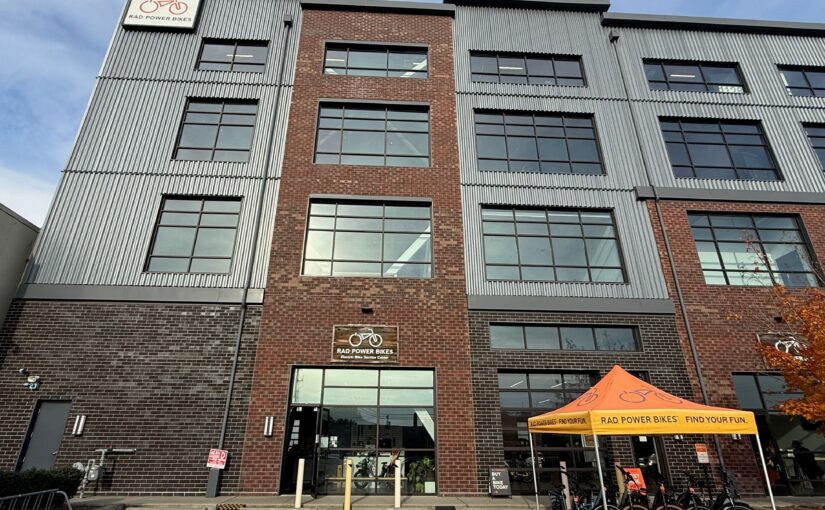
Rad operates out of a headquarters and flagship retail location on NW 52nd Street in Seattle’s Ballard neighborhood.

The company is currently led by CEO Kathi Lentzsch, who previously ran Bartell Drugs as CEO before the company sold to Rite-Aid in 2020. She also led companies including Gump’s and Elephant Pharmacy, and held exec roles at Enesco, Pottery Barn and World Market.

Lentzsch replaced Phil Molyneux, the former Sony president who stepped down earlier this year after leading Rad for more than two years. Seattle entrepreneurs Darrell Cavens and Mark Vadon, who helped grow online retail giants Blue Nile and Zulily, invested in Rad in 2019.

The company raised $25 million in 2020, led by Vulcan Capital and Durable Capital Partners LP, and by May of that year as the pandemic took hold, Rad was fielding a 297% increase in demand due to rapid changes in consumer transportation and exercise habits.

As the global electric bike market exploded, Rad took on another $150 million in 2021 from big-name investors such as Counterpoint Global (Morgan Stanley), Fidelity Management & Research Company, The Rise Fund, the global impact investing platform managed by TPG, and funds and accounts advised by T. Rowe Price Associates.

Later that year, as ridership surged, Rad raised another $154 million. In April 2022, the company began a series a layoffs, slashing 100 jobs from its 725-person workforce as part of what it described as a restructuring. Another 63 employees were cut in July, and more followed in December.

Radenbaugh stepped down as CEO and was replaced by Molyneux, who was hired as president and COO earlier in 2022. Collins had resigned in 2021.

Layoffs continued into 2023 and 2024, and the company stopped selling its bikes to customers in the United Kingdom and European Union. Rad’s struggles come amid a broader cooling of the e-bike market. Europe’s VanMoof filed for bankruptcy in 2023, while Belgium-based Cowboy and other rivals have struggled to find sustainable footing after pandemic-era highs. Rising costs, tariffs and other factors have forced several electric-bike makers to downsize or seek buyers.

Copy of the letter the company sent to Rad Power Bikes employees:
As you are aware, Rad Power Bikes Inc. (“Rad”) has faced economic challenges following the pandemic impacts. Like other companies in the traditional and e-bike industry, Rad did not anticipate the sudden drop in consumer demand from Covid-era peaks. Rad has made significant progress in selling down the substantial excess inventory of finished goods built up during Covid and has been working to minimize its liabilities for raw materials purchased during or shortly after Covid. However, Rad continues to face significant financial challenges, including in the form of tariffs and the macroeconomic landscape. For the past several months, executive leadership has explored different ways to continue Rad’s business, including strategic partnerships with other companies that could acquire the company or provide funding so the company could keep moving forward. Until recently, one such option seemed very promising and appeared to be likely to close. Unfortunately, that did not come to fruition.
Leadership is still working to find other viable options to keep the Rad brand alive. The collective mantra has been and will continue to be, “Save Rad.” Rad is nothing without its people and wants to ensure that all employees are taken care of and provided for to the fullest extent feasible. Executive leaders are hopeful that a viable solution will be found to ensure that Rad team members remain gainfully employed for the foreseeable future. However, to be fully transparent, despite our collective efforts, it is possible that this may not happen, and Rad may be forced to cease operations. In the event that occurs, Rad is providing this notice to you to satisfy any obligation that may exist under the federal Worker Adjustment and Retraining Notification (WARN) Act and the State of Washington’s “mini-WARN” Act (collectively “the WARN Acts”). While Rad hopes this notice is ultimately unnecessary and does not concede that the WARN Acts apply or that notice is required, the company nonetheless wishes to provide as much notice of the potential closure as possible.
To be clear, Rad’s leaders are still fighting to find ways to continue and emphasize that the cessation of Rad’s operations is not a foregone conclusion. What we do now as a team can impact the mission to Save Rad. Rad needs every team member to keep providing excellent service to keep fighting. In the event the company is forced to close, Rad would be required to cease operations on January 9, 2026 or within 14 days thereafter. In that case, Rad expects that any cessation of operations will affect all locations and departments, will be permanent in nature, and that all employees will be terminated effective January 9, 2026. The cessation of Rad’s operations would not be the result of relocation or contracting out the company’s operations or the affected employees’ positions. The affected Washington state employees (listed below) are not represented by any union and there are no bumping rights applicable to the affected employees.
Pursuant to the WARN Acts, this notice is applicable only to those employees assigned to the Seattle office located at 1121 NW 52nd Street, Seattle, WA 98107, or remote employees reporting to the Seattle office. However, Rad has elected to notify all employees, regardless of location, and provide the same information regarding Rad’s financial situation and potential next steps. All other locations employ less than 50 individuals and are not subject to the WARN Acts’ formal notice requirements.
Rad’s Worker Adjustment and Retraining Notification: Sign up for GeekWire newsletters:

Arrived Raises $27 Million to Revolutionize Real Estate Investing

Seattle-based tech startup Arrived has secured $27 million in new funding to fuel its innovative platform, dubbed a ‘stock market’ for rental properties. This latest round was led by Neo, with significant backing from Forerunner Ventures, Bezos Expeditions, Core, and other prominent investors. Total funding for Arrived now exceeds $60 million.

Arrived’s platform allows everyday investors to purchase fractional shares of single-family rental homes and vacation rentals, starting with as little as $100. It provides an alternative route to real estate exposure without the complexities of traditional mortgages or property management. The company handles all aspects, from property acquisition and financing to renovations and tenant relations.

Investors can acquire shares through the Arrived website, receiving quarterly dividends from rental income plus a share of any property appreciation after a multi-year holding period. Since its launch in 2019, the platform has attracted nearly 900,000 registered investors who have invested over $340 million.

Key milestones include the distribution of more than $55 million and the funding of over 550 properties across 65 markets within the United States.

This week, Arrived announced the launch of its Secondary Market – a peer-to-peer marketplace enabling investors to directly buy and sell shares of rental homes. This market, introduced earlier this year, saw over 57,000 buy and sell orders within its first three weeks.

‘We believe real estate investing is going to move online,’ stated Ryan Frazier, co-founder and CEO of Arrived. ‘Our vision is a future where real estate investing feels just like investing in public companies – where anyone can buy and sell shares of properties in minutes, not months.’

Arrived generates revenue through various fees associated with property acquisition and management. Notably, they launched the ‘Seattle City Fund’ earlier this year, offering targeted exposure to a single metropolitan area’s housing market.

The company operates within a broader trend of tech companies applying fintech, crowdfunding, and fractional-ownership models to residential real estate, competing with firms like Landa and Lofty. Despite the innovation, concerns remain regarding the potential impact on affordability due to increased investor demand.

Notable investors include Marc Benioff (Salesforce CEO), Spencer Rascoff (Match Group CEO), and Dara Khosrowshahi (Uber CEO).