Kymeta Appoints New CEO to Fuel Defense Operations Expansion

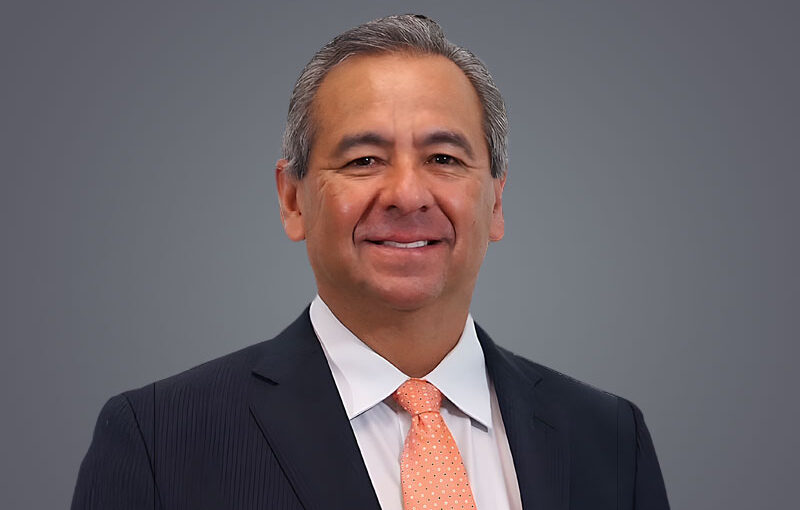
Redmond, Washington-based Kymeta, a specialist in mobile satellite communications, has appointed Manny Mora as its new president and CEO, effective immediately.

Established in 2012 with investment from Microsoft co-founder Bill Gates, the company is significantly increasing its focus on providing services to the U.S. Department of Defense and allied military forces.

Mora brings almost four decades of experience from General Dynamics Mission Systems, where he oversaw the company’s partnerships with the Department of Defense, the intelligence community, and the U.S. Department of Homeland Security.

‘As the defense community modernizes its command-and-control infrastructure, Kymeta is ideally positioned to deliver mobile SATCOM solutions designed for the most challenging environments,’ stated Nicole Piasecki, chair of Kymeta’s board of directors. ‘Manny Mora’s operational expertise and strategic vision will be crucial in expanding our impact and solidifying our role as a reliable partner for national security clients,’ she added.

Kymeta is benefiting from trends reshaping the aerospace and defense sector, including advancements in software systems, autonomous platforms, satellite communications, and artificial intelligence.

Recently, Kymeta was selected by the U.S. Army as the provider of multi-orbit satellite communications for its Next Generation Command and Control pilot program. The initiative utilizes the company’s Osprey u8 terminal technology to provide connectivity for military personnel.

‘Our innovative technology is already transforming how defense and government customers communicate across various domains,’ Mora commented.

Manny Mora succeeds Rick Bergman, formerly a vice president at AMD, who served as CEO from April 2024.

Kymeta’s technology utilizes metamaterials to create steerable antennas controlled by software, eliminating mechanical components. These hybrid cellular-satellite terminals enable communications in areas difficult to reach, a key interest for defense clients.

The company also offers technology for emergency services, maritime operations, wildfire-fighting, and other specialized applications. Kymeta secured $84 million in funding in 2022, bringing total investment to nearly $400 million to date.’
AI Agents for Engineering Managers: Actual AI Raises Seed Funding

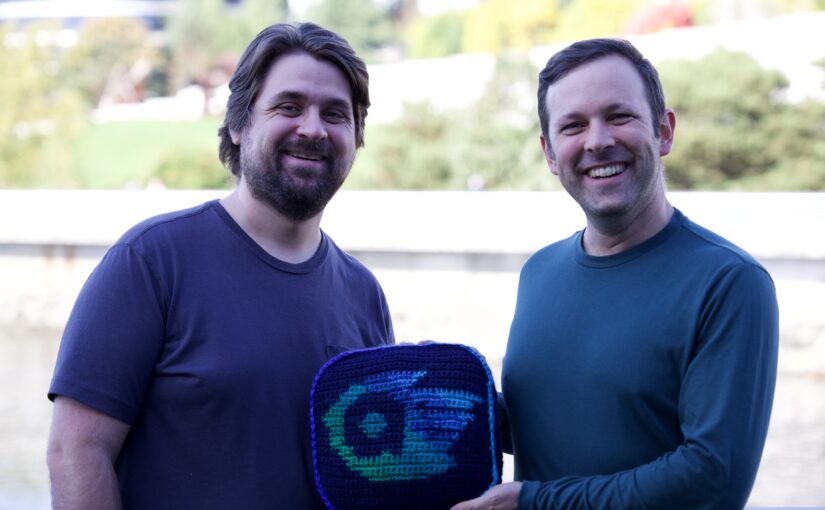
Engineering managers are facing unprecedented challenges as artificial intelligence transforms software development. To address this, Seattle startup Actual AI has secured $3.2 million in seed funding led by AlleyCorp. The company is developing autonomous agents designed to assist engineering managers in navigating the complexities of AI-driven development.

Traditional AI coding tools, while streamlining certain tasks, have introduced new management needs – increased manual review, coordination requirements, and ongoing maintenance issues. Actual AI’s agent automates recurring management duties, including issue triaging, sprint summaries, code review routing, and architectural consistency enforcement. It also aims to reduce dependence on senior engineers and support the development of junior developers.

‘We’re building an engineering manager agent that actually brings guardrails to AI-powered software development,’ stated CEO John Kennedy.

The company targets organizations with 50 to 500 developers and currently boasts 32 active pilot programs along with initial revenue streams. AlleyCorp partner Kenneth Auchenberg highlighted the growing imbalance: ‘Managers are outnumbered, and it’s created bottlenecks that are killing productivity.’

Actual AI’s approach differs from traditional data dashboards, focusing on automation rather than simple reporting. CEO John Kennedy explains, ‘A lot of engineering managers want to be player-coaches.’

Key investors include AlleyCorp, Irregular Expressions, G2C Ventures, and prominent angel investors such as Bobby Jaffari (former Freshworks Americas president) and Bede Jordan (former Shelf Engine CTO).

Actual AI’s recent recognition came from GeekWire’s Startup Radar series.

Seattle Tech Roundup: Key Stories from September 21, 2025

Catch up on the latest developments in the Seattle tech scene with this week’s top stories.

  • Layoffs and National Attention: The Wall Street Journal highlighted the impact of recent layoffs in Seattle, a city significantly reliant on Microsoft and Amazon.

  • Sila’s Manufacturing Facility: Next-generation battery materials startup Sila is commencing operations at its innovative automotive-scale manufacturing facility in Washington.

  • IShowSpeed’s Seattle Appearance: A notable event involving IShowSpeed drew attention in Seattle.

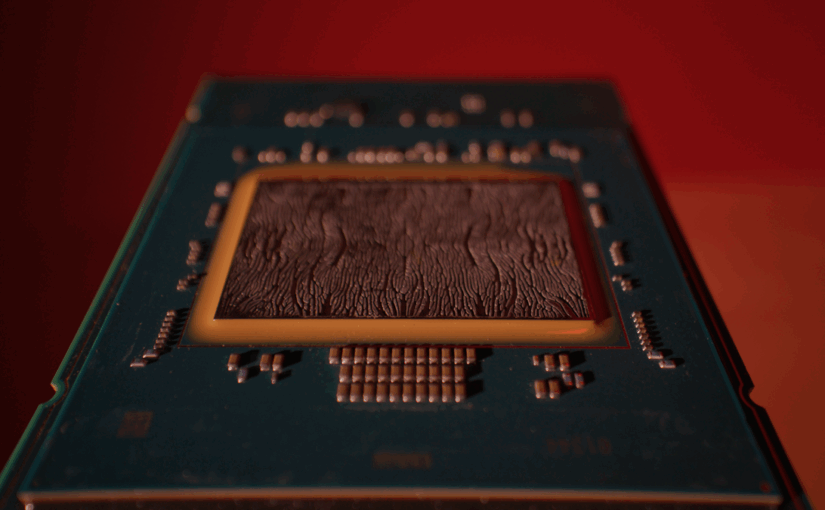
  • Microfluidics Cooling System: Microsoft unveiled a revolutionary microfluidics cooling system, inspired by leaf veins and utilizing AI to optimize data center efficiency.

  • Robotics and AI Discussions: GeekWire spoke with Srinivasa regarding the state of robotics, entrepreneurial opportunities, and Seattle’s potential as a global AI and robotics hub.

  • Natural Organic Reduction Expansion: Thirteen more states have followed Washington’s lead in legalizing natural organic reduction.

  • Reserve Roastery Closure: Starbucks closed its flagship Reserve Roastery in Capitol Hill, marking the end of an era for this unique coffee experience.

  • Mariners Broadcasting Shift: The Seattle Mariners are transitioning all broadcast production, carriage, and streaming to Major League Baseball starting in 2026.

  • Video Call Scheduling: A recent discussion centered around scheduling a video conference.

The New Space Race: Bezos, Musk, and the United States’ Lunar Ambitions

Jeff Bezos’ Blue Origin space venture has only just begun to launch a heavy-lift rocket that was a decade in the making — its orbital-class New Glenn launch vehicle, which had its first flight in January. But it’s already planning something even bigger to rival Starship, the super-rocket built by Elon Musk’s SpaceX. Bezos simply isn’t ready to share those plans yet. Actually, a super-heavy-lift rocket concept known as New Armstrong (named in honor of first moonwalker Neil Armstrong) has been talked about for almost as long as New Glenn (whose name pays tribute to John Glenn, the first American in orbit). Bezos mentioned the idea way back in 2016, but said at the time that it was “a story for the future.” Details about New Armstrong are still a story for the future, according to an account in “Rocket Dreams,” a book about the billionaire space race written by Washington Post staff writer Christian Davenport. “They’ve been very quiet about it,” Davenport says in the latest episode of the Fiction Science podcast. “I asked Jeff specifically about that at the New Glenn launch, and he didn’t want to talk about it.”

In the book, he quotes Bezos as saying only that “we are working on a vehicle that will come after New Glenn and lift more mass.” New Armstrong is one of the few mysteries that Davenport wasn’t able to crack in his account of the space rivalry between Bezos and Musk. Davenport first addressed that rivalry seven years ago in a book titled “Space Barons,” but this updated saga is set in the context of an even bigger rivalry between America and China. Both nations are aiming to send astronauts to the moon by 2030, if not before. Acting NASA Administrator Sean Duffy doubled down on the space race this week when the space agency introduced 10 new astronaut candidates to the public. “I’ll be damned if the Chinese beat NASA, or beat America, back to the moon,” he said. Duffy’s boss, President Donald Trump, has high expectations as well. During his inaugural address, Trump said it was “our manifest destiny” to have U.S. astronauts plant the Stars and Stripes on Mars. Musk, who was in the audience, responded with a gleeful thumbs-up.

Six decades ago, NASA was fully in charge of the first space race. But this time around, the space agency is depending more than ever on private companies to manage how America will get to the moon and Mars. The parallel races between America and China, and between SpaceX and Blue Origin, are the focus of “Rocket Dreams.” For now, SpaceX is miles ahead: It’s been flying astronauts for NASA since 2020, and beat out Blue Origin for a multibillion-dollar contract to land the first crew on the moon for NASA’s Artemis program. In “Rocket Dreams,” Davenport writes that SpaceX’s dominance has been a long-running source of frustration for Bezos. On multiple occasions, reports bubbled up that “Amazon Jeff” would be turning up the heat on Blue Origin to accelerate progress — just as he has historically done at Amazon, the other company he founded. Bezos made his most recent major move two years ago when he named former Amazon VP Dave Limp to become Blue Origin’s CEO. New Glenn’s first launch came a little more than a year after Limp took the helm. But New Glenn’s second launch — which is supposed to send a pair of orbiters to Mars for NASA — has been repeatedly delayed. “They still have a lot to prove, and they’re still really, really far behind SpaceX,” Davenport says. “I think Amazon Jeff is probably frustrated and wants to move faster.” “Rocket Dreams” takes the story of the space race up to two of its recent high points: SpaceX’s execution of a spectacular catch of the Starship launch system’s Super Heavy booster last October, and the first launch of Blue Origin’s New Glenn. Since then, there have been a few new twists and turns. SpaceX went through three less-than-fully successful Starship flight tests, followed by a more encouraging flight last month. The fact that Starship’s development timeline is lagging behind Musk’s ever-optimistic projections has led some to wonder whether a modified version of the Starship upper stage can get the Artemis 3 crew onto the lunar surface on NASA’s 2027 timetable. Count Davenport among the wonderers. “Pretty much everyone knows that that’s highly unlikely,” he says. Meanwhile, Blue Origin is continuing to work on its own Blue Moon lunar landing system, which was awarded a NASA contract two years after SpaceX won the initial lunar lander competition. The Blue Moon MK1 lander is currently scheduled to take on an uncrewed test mission to the moon within the coming year — which means it’s possible that Blue Moon will reach the lunar surface before Starship does. Blue Origin is also working on moon-related projects beyond launch and landing. In one of the later chapters of “Rocket Dreams,” Davenport recounts his visit to a secret laboratory north of Los Angeles, where Blue Origin engineers are working on technologies to convert moon dirt into valuable resources ranging from breathable oxygen to solar cells and transmission wire. The project, known as Blue Alchemist, won $34.7 million in NASA funding in 2023 and passed a critical design review just this month. Davenport says Blue Origin seems to be ahead of SpaceX in the development of off-world infrastructure. “You hear Elon talk about, yeah, we’re going to build a city on Mars. But what technologies are you working on to make us have a sustainable presence there?” he says. Unlike Davenport’s earlier book, “Rocket Dreams” doesn’t spend a significant amount of ink on other players in the commercial space race — except to touch on Virgin Galactic founder Richard Branson’s role in spoiling the hype surrounding Bezos’ suborbital spaceflight in 2021. The rise of a second wave of space upstarts will have to be documented in a future book. Davenport is most intrigued by Kent, Wash.-based Stoke Space, which is building its own reusable rocket. “They’re moving incredibly fast, and everything you hear about their progress is very, very positive,” he says. “There’s always a lot of hype around these companies, and the bottom line is, you have to prove it. You have to fly.” Perhaps the biggest issues to watch for in a sequel have to do with the Trump administration and what happens to NASA’s Artemis moon program over the next three years. In “Rocket Dreams,” Davenport recounts an episode in which NASA officials had to tell Trump that a milestone launch would be postponed if the conditions weren’t right, “and there is nothing you can do about it,” and there is nothing you can do about it. Will Trump take no-go for an answer this time around? “You begin to worry about safety — about cutting corners, doing something to accelerate the program, and getting there for the political goal of beating China,” Davenport says. “I just worry that maybe you do something that is unsafe.” Trump’s fondness for winning isn’t the only factor behind the new space race. There’s a bigger reason why the federal government, and tech billionaires, are spending billions of dollars on space programs. In an age of increasing threats from above, ranging from drones to hypersonic weapons to satellite killers, space is the final frontier for national security — and for the perception of global technological prowess. That’s just how it was during the first space race in the 1960s. “Some of the biggest themes in the next five to 10 years may not necessarily come from civil space, or it’ll come from civil space acting somehow in concert with national security space, with the Pentagon,” Davenport says. “Because I think the idea that space is a warfighting domain and a contested environment — that is here, unfortunately, and we are seeing that.” Christian Davenport will discuss “Rocket Dreams” and the new space race at Seattle’s Museum of Flight at 7 p.m. PT Oct. 1, with Alan Boyle serving as the event’s moderator. Check the museum website for ticket information, and consult this LinkedIn post to find out about Davenport’s other upcoming book-tour events in Chicago; Orlando, Fla.; and Huntsville, Ala. Alan Boyle’s co-host for the Fiction Science podcast is Dominica Phetteplace, an award-winning writer who is a graduate of the Clarion West Writers Workshop and lives in San Francisco. To learn more about Phetteplace, visit her website, DominicaPhetteplace.com. Fiction Science is included in FeedSpot’s 100 Best Sci-Fi Podcasts. Check out the original version of this report on Cosmic Log for recommendations on further reading about the new space race. And stay tuned for future episodes of the Fiction Science podcast via Apple, Spotify, Player.fm, Pocket Casts and Podchaser. If you like Fiction Science, please rate the podcast and subscribe to get alerts for future episodes.

Siddhartha Srinivasa Bets on Seattle’s Robotics Future

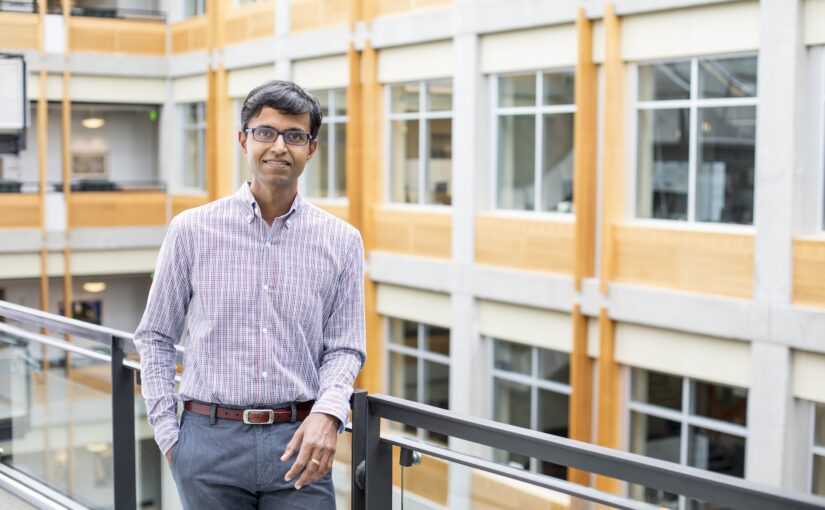
Siddhartha “Sidd” Srinivasa, a robotics pioneer with a career spanning Berkshire Grey, Amazon, and Cruise, is now joining Madrona Venture Group as a venture partner. Srinivasa believes Seattle is poised to become a global leader in AI and robotics, driven by advancements in hardware, compute power, and foundational models. However, he highlights a key challenge: the ‘last mile problem’ – robots can handle basic tasks, but scaling to complex, real-world applications remains difficult. Srinivasa emphasizes the need for breakthroughs in generalization and adaptability in robots, suggesting alternative form factors beyond the humanoid. He identifies sectors like fulfillment, computational agriculture, and commissary kitchens as potential disruptors. Srinivasa stresses the importance of a ‘pull’ – genuine customer need – for robotics, rather than simply ‘pushing’ the technology. He also cautions against applying the software model to robotics, acknowledging the unique challenges of maintaining and servicing physical robots. Srinivasa underscores the necessity of workforce re-skilling to mitigate potential job displacement and positions Seattle as a uniquely supportive ecosystem for robotics innovation, capitalizing on strong university partnerships and a thriving venture capital landscape.

Захоплююча літня практика в GeekWire: між бурями та інноваціями

За редакцією Мейді Ст олл, яка вивчає економіку та державну політику в Чиказькому університеті та народилася в Лондоні. Цього тижня я завершую стажування в GeekWire. Мій досвід почався з несподіваним чином – я опинився в центрі протесту з сиренами, поліцейськими машинами та звинуваченим, а також натхненним, у середньому місці, де мене розглядало як ‘винуватця’. З того моменту, темп не зупинився. Іноді я спілкувався з підприємцями, що писав про ШІ в школах; іншим часом я вивчав, як використовувати професійну камеру на заході Microsoft Alumni Network Connect 2025, або галавв на озері Лой, яке в основному займаються лодочними поїздками. Сейтл взяв мене з історії в історію та з простору в простір. Я виросла в Лондоні, а зараз навчаюся в Чикаго. Обидва міста сформували моє уявлення про міське життя: Лондон, витончений і космополітичний; Чикаго, витончений та галасливий, але пом’якшений теплом середземного заходу; Сейтл був для мене дещо новим. Сейтл напрочуд сповільнений та внутрішньо орієнтований, як і Лондон та Чикаго, але безпечний, хоча і амбітний. Сейтл асоціюється з технологіями та креативністю, але також з образом життя: кава, піші прогулянки, їзда на велосипеді та переправи. Ця метаполіс намагається збалансувати свій глобальний технологічний вплив з більш невеликим, затишним способом.

Однією з найбільш привабливих частин мого досвіду було спостерігати за тим, як це все виглядало ззовні. Я хотів приєднатися до ‘Seattle Freeze’ і відчувати напругу та розчарування; замість цього я зрозумів, що люди були дружніми, як я вже очікував – відкрито, як у Чикаго, хоча й не настільки, як у Лондоні, і взаємодії були дуже позитивними та вітайте. Дослідження без автомобіля було складним, але виявилося, що багато районів були дуже зручними для ходьби та їзди на велосипеді, що робить дослідження міста легким та веселим. Більш важке – видимі бездомність та потреби у злочинності, які були нагадуваннями про економічні труднощі, пов’язані з технологічним бумом Сейтла. Це місто інновацій та зростання, але також контрастів — блискучі хмарочоси та намети можуть ділитися тим же блоком.

Не дивлячись на ці відмінності, Сейтл здавався містом, яке все ще формує себе, і яке заохочує до саморефлексії, а не лише амбіцій. Для людини, що прибула ззовні, це було напрочуд захопливо. Під час моєї практики GeekWire занурив мене в технологічний сектор Сейтла. Я мав можливість поширити знання про ШІ в школах, стартапи, що увійшли до списку IA40 Madrona, а також у сільському господарстві. Існує кілька моментів, які я не можу забути:

Я також мала можливість приєднатися до деяких важливих розмов міста, від президента Microsoft Brad Smith у Seattle Metro Chamber до Alumni та підприємців на заході Microsoft Alumni Network Connect 2025, до Breaking the Glass Ceiling за участі Holly Grambihler, Miya Doane та Jessica Reeves, а також GeekWire за участі свого власного ‘deck party’.

Моя робота була лише половиною розповіді. Жити в готелі Fremont дало мені можливість спостерігати за чарами району: тайська кухня на кожному кутку, недільний ринок, кава та Lime scooters, що проїжджали вздовж Burke-Gilman Trail.

Коли я не була у Fremont, я сиділа на службі в Queen Anne. Між прогулянками з Otis, собакою брата Джонга Кука, та вечерами на Kerry Park, я могла побачити спокійний, сонячний боковий Сейтла, де я могла побачити кращі вигляд свого міста.

Я намагалася вкласти якомога більше в моє навчання, найцікавішим було: Експериментуючи з ШІ в журналістиці. Інструменти, такі як Otter.ai, пришвидшували транскрипцію; ChatGPT пропонував конструктивний зворотний зв’язок для мого написання, що доповнював ретельні редагування від GeekWire редактора Taylor Soper; а також ‘Hacks & Snacks’ від Джессіки показала мені, як ШІ може полегшити адміністративні завдання.

Це було не лише про те, щоб навчитися нових технічних прийомів. Це було про створення культури прозорості навколо ШІ та визнання того, що галузь, в яку я хочу піти, вже змінюється завдяки ШІ. Як ця практика показала, ШІ не можна ігнорувати, як інструмент, як виклик і як кордон, де журналісти повинні постійно визначати та захищати свою справу.

Наприкінці літа моя літня практика стала колажем: протести та панелі, дедлайни та собаки, переправи та фестивалі. Сейтл може бути сповільненим, ніж Лондон та більш неформальним, ніж Чикаго, але це, безумовно, настільки ж амбіційний – і я відчувала амбіції в ритмі моїх днів тут. Дякую всім, кого я зустріла!

Microsoft’s Innovative Cooling System: A Leap Towards 3D Chip Architectures

Microsoft is pioneering a revolutionary cooling system utilizing microfluidics to drastically improve the performance of its servers and future chips. This innovative approach, inspired by the vein structure of leaves and driven by AI, allows processors to operate at higher temperatures without the risk of overheating. By delivering liquid coolant directly to the hottest points within the processor via tiny channels, the system achieves up to three times greater heat removal efficiency than traditional cold plates, enabling effective overclocking. This technology is a critical step towards realizing the potential of 3D chip architectures, where layers of silicon are stacked to reduce latency, but are traditionally hampered by heat dissipation challenges.

The microfluidic system’s AI-driven customization adapts to the unique heat signatures of different workloads, optimizing cooling for maximum efficiency. Microsoft is exploring integrating this technology into its own Azure Cobalt and Maia AI accelerator chips, as well as future server generations. The goal is to address the escalating demands of AI workloads, where traditional hardware alone struggles to keep pace. Microsoft’s approach emphasizes a collaborative ecosystem, working with partners and the broader tech community to establish microfluidics as an industry standard. This strategy is pivotal for achieving breakthroughs like 3D silicon stacking, which will fundamentally reshape how data is processed and transmitted.

NASA Announces New Class of Astronauts, Including Geologist with Space Research Experience

NASA has unveiled its latest cohort of astronauts, comprising ten individuals poised to play a crucial role in the agency’s ambitious space exploration endeavors. Among them is Lauren Edgar, a geologist from the Pacific Northwest, adding a unique expertise to the team. This marks the first time in NASA’s history that a female astronaut graduate has already journeyed into orbit, setting a new record.

The ‘Class of 2025’ was introduced at Johnson Space Center in Houston, with prominent figures in Congress and other VIPs in attendance. Acting NASA Administrator Sean Duffy emphasized the rigorous selection process, noting the application of over 8,000 people, highlighting the agency’s commitment to recruiting the ‘best and brightest.’

Edgar, a 40-year-old native of Washington, D.C., who grew up in Sammamish, Wash., and graduated from Skyline High School, brings extensive experience in space research. She previously worked at the U.S. Geological Survey and NASA, leading the USGS’ TARGET training program and supporting missions like the Mars Science Laboratory and Mars Exploration Rover. Her career highlights include a stint as deputy principal investigator on the Artemis 3 Geology Team.

Other members of the new class include Ben Bailey, Adam Fuhrmann, Cameron Jones, Yuri Kubo, Rebecca Lawler, Anna Menon, Imelda Muller, Erin Overcash, and Katherine Spies. Each brings diverse backgrounds and expertise – from military aviation and test piloting to engineering and medical experience. These individuals will undergo extensive training in preparation for future missions, including the Artemis program’s planned trips to the moon and, ultimately, to Mars.

NASA has a rich history of astronaut recruitment, having selected the original Mercury Seven in 1959, with a total of 370 candidates chosen to date. The upcoming Artemis 2 mission, slated for launch next year, aims to send a crew of four astronauts around the moon, setting the stage for a subsequent mission to land on the lunar surface in 2027. Despite challenges and questions surrounding the timeline, NASA remains committed to its leadership in space exploration, asserting its determination to return to the moon and eventually, to Mars.