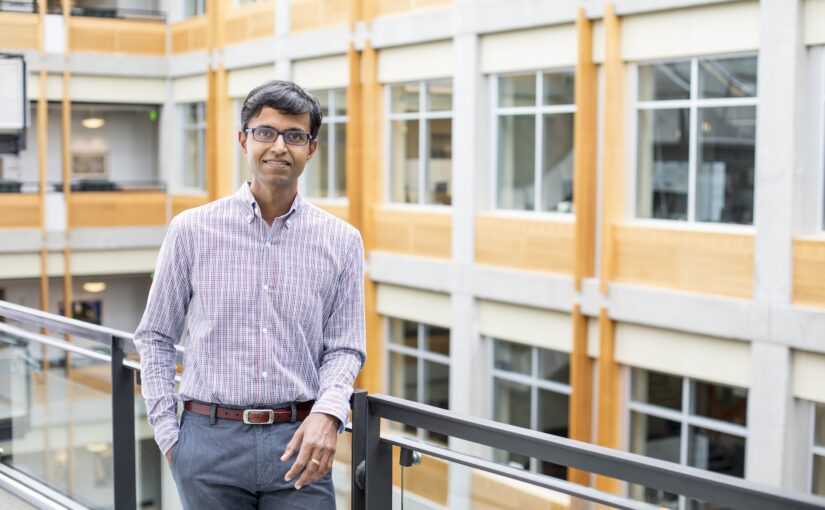
Sam Ransbotham on Navigating the Nuances of AI: Beyond Hype and Mediocrity

Sam Ransbotham, a professor of business analytics at Boston College and host of the ‘Me, Myself and AI’ podcast, offers a pragmatic perspective on the evolving role of Artificial Intelligence. He observes a fascinating trend in his classroom: while some students are leveraging AI to achieve remarkable results, others fall into the trap of ‘phoning things into the machine,’ leading to a superficial engagement with the technology. Ransbotham emphasizes that the depth of understanding a user possesses directly correlates with the value derived from a tool. A cursory approach yields a rudimentary outcome, while deeper exploration unlocks greater potential.

Despite concerns about students prioritizing mediocrity—highlighting Boston College’s ‘Ever to Excel’ motto—Ransbotham maintains a positive outlook on AI’s potential. He argues that the technology’s true value often lies not in its output, but in the critical thinking it inspires. ‘The data gives better insights about what you’re doing, about the documents you have, and you can make a slightly better decision,’ he states, emphasizing the importance of questioning AI’s outputs, even when they seem ‘wrong’ or ‘ridiculous.’

Ransbotham draws parallels between the rise of Wikipedia and the current AI landscape. Just as Encyclopedia Britannica’s economic value diminished with the advent of Wikipedia, AI’s value extends beyond immediate, quantifiable results. He focuses on the ability of AI to provide new insights and encourage deeper analysis, framing the technology as a tool for ‘searching for the signal in the noise.’ Ultimately, Ransbotham advocates for a thoughtful and discerning approach to AI, recognizing its potential while guarding against the temptation of simply accepting superficial outcomes.
Amazon’s Massive Investment in Government AI Infrastructure

Amazon is set to invest up to $50 billion in a significant expansion of its AI and advanced computing infrastructure, specifically tailored for U.S. government agencies.

This ambitious project, slated to begin in 2026, will dramatically increase Amazon Web Services’ (AWS) data center capacity across Top Secret, AWS Secret, and AWS GovCloud (US) regions – environments designed for handling classified and sensitive workloads.

Federal agencies will gain access to powerful AI tools, including Amazon SageMaker for custom model training and Amazon Bedrock for deploying and managing AI models, as well as building advanced agents.

The new centers will be equipped with Amazon’s proprietary Trainium AI chips, alongside NVIDIA hardware, enabling a substantial boost in computing power.

This investment aims to accelerate breakthroughs in government operations, spanning scientific research, intelligence analysis, and critical decision-making in areas such as disaster response and climate modeling. As stated by AWS CEO Matt Garman, “Our investment in purpose-built government AI and cloud infrastructure will fundamentally transform how federal agencies leverage supercomputing.” Amazon first introduced government-specific cloud infrastructure in 2011 and now supports over 11,000 government agencies worldwide.

Washington Lawmakers Consider AI Bargaining Rights for Public Employees

Washington state lawmakers are set to revisit the possibility of requiring government employers to bargain with public sector unions over the adoption of artificial intelligence technology. House Bill 1622 aims to mandate this bargaining if AI affects wages or worker performance evaluations.

The bill, championed by Rep. Lisa Parshley, previously stalled in the Senate after initial support in the House. Opponents, including business groups and city officials, argued the measure would skew the balance of power and potentially delay workplace innovation.

‘Public sector bargaining covers wages, hours and working conditions and agencies are already required to bargain any change that touches those areas, but without legislation, that bargaining happens after implementation,’ said Washington State Labor Council President April Sims. ‘With legislation like House Bill 1622, it would happen before.’

A September directive from the state’s Office of Financial Management requires union-represented state employees six months’ notice of any use of generative AI if it ‘will result in a consequential change in employee wages, hours, or working conditions.’

The debate reflects a broader conversation about a federal versus state approach to regulating AI. While President Donald Trump is reportedly considering an executive order to sue states that pass AI regulations, Washington state’s focus is on incorporating worker input into the process. This includes establishing human review for systems used in employment-related decisions.

University of Washington Secures $10 Million Investment to Lead AI Integration in Education

The University of Washington has announced a significant $10 million donation from Microsoft pioneer Charles Simonyi and his wife, Lisa Simonyi, to launch ‘AI@UW,’ a university-wide initiative focused on responsibly and effectively integrating artificial intelligence into the classroom and research endeavors.

This generous gift establishes a new Vice Provost for Artificial Intelligence, with Professor Noah Smith of the Paul G. Allen School of Computer Science & Engineering taking on the inaugural role. Professor Smith emphasized the substantial expertise surrounding smart AI adoption at the UW and his aim to connect and leverage this knowledge to accelerate learning and innovation.

Faculty members are actively seeking guidance as students increasingly utilize AI tools. A primary concern is understanding how to respond to this shift in student behavior. ‘My students are using AI. What now? What am I supposed to do? How do we respond to this?’ Professor Smith stated, highlighting the need for strategic adaptation.

The University’s approach involves AI assisting students with questions and study materials, while ensuring students retain responsibility for their education. On the faculty side, AI can support the creation of fair and effective assessments. A key component of AI@UW is the SEED-AI grant program, designed to fund innovative and exploratory uses of AI in courses, with the call for proposals expected in the coming weeks.

Three key focus areas are being prioritized: ensuring academic excellence, advancing research, and fostering innovation. University President Robert Jones believes the initiative and new vice provost role will maintain the university’s strategic advantage in AI. ‘We need somebody that wakes up each and every day that thinks about AI across the three parts of our mission: our teaching, our research and our innovation agenda,’ Jones said.

Charles and Lisa Simonyi have previously donated over $27.5 million to the UW since 2009, supporting DIRAC, the Ana Mari Cauce Welcome Center, and the Allen School building. Charles Simonyi, a technical fellow at Microsoft, and Lisa Simonyi, chair of the UW Foundation Board, are instrumental in this groundbreaking initiative. Professor Smith’s affiliations also span multiple departments, including the Department of Linguistics, the Center for Statistics and the Social Sciences, the eScience Institute, and the Stroum Center for Jewish Studies, providing invaluable cross-disciplinary experience.

Microsoft’s ‘Superfactory’: A New Era of AI Infrastructure

Microsoft has unveiled a groundbreaking approach to data center design and operation, dubbed its ‘superfactory,’ focused on facilitating the training and deployment of advanced artificial intelligence models. This innovative system links massive data centers across vast distances – in this case, Wisconsin and Atlanta, approximately 700 miles apart – via a high-speed fiber-optic network.

The ‘superfactory’ represents a shift from traditional cloud data centers, which cater to numerous separate applications, to a unified architecture specifically engineered for single, massive AI workloads. Each facility incorporates hundreds of thousands of Nvidia GPUs connected through an AI Wide Area Network (AI-WAN) for real-time sharing of computing tasks.

Microsoft’s new two-story data center design maximizes GPU density and minimizes latency, aided by a closed-loop liquid cooling system. By pooling computing capacity across multiple sites and dynamically redirecting workloads, the system distributes power requirements efficiently across the grid.

This interconnected infrastructure will be utilized to train and run next-generation AI models for key partners, including OpenAI, and Microsoft’s own internal models. This development highlights the intense competition among major tech companies to build the necessary infrastructure for the rapidly expanding field of artificial intelligence.

AI Startup BluePill Raises $6 Million to Revolutionize Brand Research with Simulated Focus Groups

Seattle-based AI startup, BluePill, has secured $6 million in seed funding to transform how brands understand consumer behavior. The round was led by Ubiquity Ventures, with participation from Pioneer Square Labs and Flying Fish Partners.

Launched earlier this year, BluePill leverages artificial intelligence to simulate consumer reactions to marketing concepts, products, and designs – offering brands near-instant feedback instead of relying on traditional, time-consuming focus groups.

The company builds tailored AI consumer audiences for each brand, utilizing real-world data like social media conversations, surveys, and customer input, mirroring the brand’s target demographic.

Users upload their ideas to the platform and receive immediate predictions of their audience’s response, effectively running a massive, virtual focus group.

BluePill is also developing pre-built, industry-specific AI audiences – such as “U.S. moms” or “Gen Z snack buyers” – allowing brands to directly query for insights without constructing custom models.

BluePill claims its simulated audiences achieve 93% accuracy compared to human panels. The company currently works with brands like Magic Spoon, Kettle & Fire, and the Seattle Mariners, utilizing the platform to test fan engagement and in-stadium activations.

“Our edge is validated, accurate insights – and the fact that we deliver these in minutes for a fraction of the cost makes it a no-brainer,” stated BluePill founder and CEO Ankit Dhawan.

BluePill is already generating revenue through a fixed annual subscription model.

The startup is challenging established marketing research giants like Ipsos, Qualtrics, and Nielsen, which traditionally depend on lengthy, costly human panels. Dhawan highlighted that newer startups increasingly utilize large language models to mimic consumer responses.

Dhawan’s background includes experience as an entrepreneur-in-residence at the Allen Institute for AI (Ai2) and a previous role as a product leader at Amazon, specializing in AI products.

Key team members include Puneet Bajaj and Andy Zhu. BluePill recently garnered attention in GeekWire’s Startup Radar in June.

Sunil Nagaraj, a founding partner at Ubiquity Ventures, emphasized that “predicting consumer behavior is the holy grail of marketing.” Nagaraj, based in Silicon Valley, is an active participant in the Seattle startup ecosystem and was an early investor in Auth0, which Okta acquired for $6.5 billion.

Kymeta Appoints New CEO to Fuel Defense Operations Expansion

Redmond, Washington-based Kymeta, a specialist in mobile satellite communications, has appointed Manny Mora as its new president and CEO, effective immediately.

Established in 2012 with investment from Microsoft co-founder Bill Gates, the company is significantly increasing its focus on providing services to the U.S. Department of Defense and allied military forces.

Mora brings almost four decades of experience from General Dynamics Mission Systems, where he oversaw the company’s partnerships with the Department of Defense, the intelligence community, and the U.S. Department of Homeland Security.

‘As the defense community modernizes its command-and-control infrastructure, Kymeta is ideally positioned to deliver mobile SATCOM solutions designed for the most challenging environments,’ stated Nicole Piasecki, chair of Kymeta’s board of directors. ‘Manny Mora’s operational expertise and strategic vision will be crucial in expanding our impact and solidifying our role as a reliable partner for national security clients,’ she added.

Kymeta is benefiting from trends reshaping the aerospace and defense sector, including advancements in software systems, autonomous platforms, satellite communications, and artificial intelligence.

Recently, Kymeta was selected by the U.S. Army as the provider of multi-orbit satellite communications for its Next Generation Command and Control pilot program. The initiative utilizes the company’s Osprey u8 terminal technology to provide connectivity for military personnel.

‘Our innovative technology is already transforming how defense and government customers communicate across various domains,’ Mora commented.

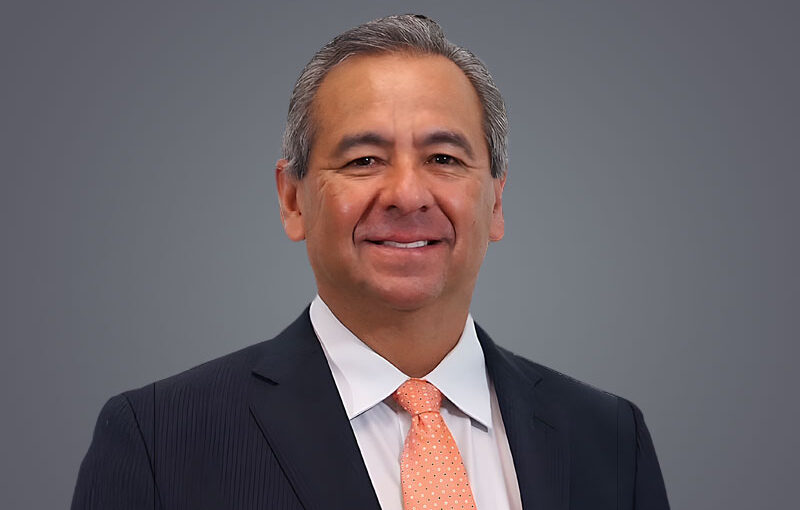
Manny Mora succeeds Rick Bergman, formerly a vice president at AMD, who served as CEO from April 2024.

Kymeta’s technology utilizes metamaterials to create steerable antennas controlled by software, eliminating mechanical components. These hybrid cellular-satellite terminals enable communications in areas difficult to reach, a key interest for defense clients.

The company also offers technology for emergency services, maritime operations, wildfire-fighting, and other specialized applications. Kymeta secured $84 million in funding in 2022, bringing total investment to nearly $400 million to date.’

AI Agents for Engineering Managers: Actual AI Raises Seed Funding

Engineering managers are facing unprecedented challenges as artificial intelligence transforms software development. To address this, Seattle startup Actual AI has secured $3.2 million in seed funding led by AlleyCorp. The company is developing autonomous agents designed to assist engineering managers in navigating the complexities of AI-driven development.

Traditional AI coding tools, while streamlining certain tasks, have introduced new management needs – increased manual review, coordination requirements, and ongoing maintenance issues. Actual AI’s agent automates recurring management duties, including issue triaging, sprint summaries, code review routing, and architectural consistency enforcement. It also aims to reduce dependence on senior engineers and support the development of junior developers.

‘We’re building an engineering manager agent that actually brings guardrails to AI-powered software development,’ stated CEO John Kennedy.

The company targets organizations with 50 to 500 developers and currently boasts 32 active pilot programs along with initial revenue streams. AlleyCorp partner Kenneth Auchenberg highlighted the growing imbalance: ‘Managers are outnumbered, and it’s created bottlenecks that are killing productivity.’

Actual AI’s approach differs from traditional data dashboards, focusing on automation rather than simple reporting. CEO John Kennedy explains, ‘A lot of engineering managers want to be player-coaches.’

Key investors include AlleyCorp, Irregular Expressions, G2C Ventures, and prominent angel investors such as Bobby Jaffari (former Freshworks Americas president) and Bede Jordan (former Shelf Engine CTO).

Actual AI’s recent recognition came from GeekWire’s Startup Radar series.

Siddhartha Srinivasa Bets on Seattle’s Robotics Future

Siddhartha “Sidd” Srinivasa, a robotics pioneer with a career spanning Berkshire Grey, Amazon, and Cruise, is now joining Madrona Venture Group as a venture partner. Srinivasa believes Seattle is poised to become a global leader in AI and robotics, driven by advancements in hardware, compute power, and foundational models. However, he highlights a key challenge: the ‘last mile problem’ – robots can handle basic tasks, but scaling to complex, real-world applications remains difficult. Srinivasa emphasizes the need for breakthroughs in generalization and adaptability in robots, suggesting alternative form factors beyond the humanoid. He identifies sectors like fulfillment, computational agriculture, and commissary kitchens as potential disruptors. Srinivasa stresses the importance of a ‘pull’ – genuine customer need – for robotics, rather than simply ‘pushing’ the technology. He also cautions against applying the software model to robotics, acknowledging the unique challenges of maintaining and servicing physical robots. Srinivasa underscores the necessity of workforce re-skilling to mitigate potential job displacement and positions Seattle as a uniquely supportive ecosystem for robotics innovation, capitalizing on strong university partnerships and a thriving venture capital landscape.

Техноновинки: Yoodli, A-Alpha Bio, MoxiWorks та інші

В Seattle продовжують відбуватися значні зміни в tech-сфері. Цього місяць було оголошено про нові посади у багатьох перспективних компаніях. Ось кілька ключових змін:

Andy Larson приєднався до Yoodli як фінансовий директор (CFO). Його досвід включає роботу для таких компаній, як Logixboard, Jobalign та Remitly. Yoodli, яка використовує генеративний штучний інтелект для покращення комунікації, залучила Larson, щоб допомогти їй продовжувати свій швидкий розвиток.

A-Alpha Bio оголосила про призначення Troy Lionberger на посаду головного бізнес-офіцера. Компанія, що спеціалізується на створенні нових антибіотиків за допомогою машинного навчання, залучила Lionberger, який раніше працював в Abbratech та Berkeley Lights.

Siddhartha (Sidd) Srinivasa приєднався до Madrona Venture Group як венчурний партнер, а також є лідером лабораторії персональних роботів у Paul G. Allen School of Computer Science & Engineering на Університеті штату Вашингтон. Його досвід включає роботу з Amazon та Berkshire Grey.

Pallavi Mehta Wahi відкрила новий офіс Arnold & Porter у Seattle та стала її головою для Western U.S. Strategic Growth. Вона раніше працювала в K&L Gates та є членом правління Seattle Metropolitan Chamber of Commerce.

Sonu Aggarwal став президентом TiE Seattle, замінивши Prashant Mishra. Раніше він був засновником та головним технічним директором Unify Square, який був придбаний Unisys за 152 мільйони доларів, а також працював у Microsoft.

Kim Koraca стала головним маркетологом MoxiWorks, яка раніше була клієнтом Koraca’s маркетингової компанії. Koraca має досвід роботи у таких компаніях, як eZsign, eZmax та Constellation1.

Abdurazak Mudesir приєднався до ради директорів T-Mobile, а David Albright отримав підвищення до керівника дизайну та комунікацій в Allen Institute for Artificial Intelligence (Ai2).

Tony Titus став CEO EchoNous, а Bradd Busick приєднався до Frazier Healthcare Partners як партнер з питань штучного інтелекту, даних та технологічного оснащення.

MeyerPro, компанія, яка обслуговує Microsoft, Nike та Boeing, призначила Doug Kamm CEO. Kamm раніше працював у VER та Fuse Technical Group.

Erika Reynoso стала головним керівником глобальної публічної роботи для Coupang, найбільшого онлайн-ритейлера в Південній Кореї. Reynoso раніше працювала в Amazon та Wells Fargo.

Nolan Van Nortwick покинув Fuse для посади партнера в Riot Ventures. Van Nortwick приєднався до Fuse як стажер у 2021 році.

Jon Maroney покинув Oregon Venture Fund, щоб стати венчурним партнером та консультантом. Maroney приєднався до фонду десять років тому.

Julie Harrelson припинила роботу в Pacific Northwest-based, software-focused investment firm. Harrelson заснувала фірму 12 років тому.

Emily Parkhurst стала членом ради директорів KUOW Public Radio. Parkhurst є засновником та генеральним директором Formidable, новинного та членського об’єднання, що зосереджене на виданні новин з точки зору, що служить жінкам.

Anson Fatland є президентом Washington Trails Association, а David Albright – заступником проректор з питань інноваційних стратегій та підприємств UW’s CoMotion entrepreneurial hub.