Amazon Reaffirms Commitment to Seattle Region Despite Changes

Following the election of a new mayor in Seattle, one of Amazon’s top executives reaffirmed its commitment to the region Tuesday, promising, “We are not going anywhere.” David Zapolsky, Amazon chief global affairs and legal officer, made the comment during an Amazon Community Impact Reception at The Spheres in Seattle, where he and others discussed the company’s philanthropic and civic initiatives from housing to food security.

“Obviously, this is a time of change, both in this region and around the world,” Zapolsky said. “Amazon remains committed to our home, this Puget Sound region. We are not going anywhere. And so we remain committed to building this community.”

It’s a rare public reaffirmation of the Seattle region as Amazon’s primary base. It follows years of political disputes over taxes and other city policies that contributed to Amazon shifting more of its workforce to Bellevue, Wash., and Northern Virginia.

With the arrival of Seattle Mayor-elect Katie Wilson, Amazon must once again establish a working relationship with a city leader who ran on promises to address issues such as affordability, brought about in part by a tech boom that Amazon helped fuel.

Wilson defeated Mayor Bruce Harrell, a more business friendly leader than Amazon was used to dealing with during the tech giant’s strained relations with City Hall. “I’ve tried to have a very supportive relationship, but also one on mutual accountability,” Harrell told GeekWire in January about his dealings with Amazon. “I think it’s working out well.”

During her campaign in September, Wilson told GeekWire that she aims to work with the tech sector and Amazon on innovative solutions to civic challenges.

A longtime community organizer and Transit Riders Union co-founder, Wilson helped design and pass Seattle’s controversial JumpStart payroll expense tax in 2020. A majority of the revenue — $360 million in 2024 — is generated from 10 companies, including Amazon. “Obviously Amazon and the other big tech companies are very important players in our city and in our economy, and so I think it’s very important that the city has working relationships there,” she said.

In the same election that ushered in Wilson, voters also overwhelmingly approved Proposition 2, a plan hatched by Harrell and City Councilmember Alexis Mercedes Rinck that will reshape the city’s business and occupation (B&O) tax that applies to gross revenue. It will impact both small startups and large tech companies such as Amazon.

According to public records, Zapolsky gave $550 to Harrell’s re-election campaign. Amazon HR chief Beth Galetti ($650) and Amazon Stores CEO Doug Herrington ($550) are among others from Amazon who contributed.

During Tuesday’s event at The Spheres, Amazon spotlighted its philanthropic efforts and the progress being made across the region, including:

Zapolsky said Amazon’s community strategy shifted as the company rapidly expanded in Seattle. He said employees and leaders have always cared about their community, but the company’s efforts were informal and relatively small-scale in its earlier days. By 2009 and 2010, Amazon had grown far faster than expected and “we were sort of backing into the scale that we have in the city,” Zapolsky said — prompting company leaders to recognize the need for a more organized approach.

From there, he said, Amazon began applying its core business principles to civic work: taking a long-term view, listening to partners to understand what the community actually needs, and focusing on where Amazon’s unique capabilities — logistics, technology, legal expertise — could make the biggest impact, rather than just financial contributions.“We’re still in the middle of the journey,” Zapolsky said.

Amazon counts more than 80,000 full- and part-time employees in the Puget Sound region. About 50,000 corporate and tech workers are in Seattle— a number that shrunk from about 60,000 in 2020 as more jobs shifted to Bellevue. The company cut 14,000 workers in broad layoffs in October, with 2,303 corporate employees in Washington state.

Zapolsky, who has been at Amazon 26 years, called his move from New York to Seattle 32 years ago the best decision he ever made. He cited the city’s amazing assets, from its people and diversity to its infrastructure improvements including the waterfront, convention center, and Climate Pledge Arena.“Even government when it tries can’t screw this up,” he said, adding, again, “We’re here to stay. We want to continue working with our partners in the community, continue making the Puget Sound region better for our community and for our employees.”

Seattle’s Hardware Heartbreak: A Recurring Pattern of High Hopes and Hard Landings

Editor’s Note: GeekWire co-founders Todd Bishop and John Cook created this column by recording themselves discussing the topic, asking AI to draft a piece based on their conversation, and then reviewing and editing the copy before publishing. Listen to the raw audio below.

If we look out GeekWire’s office window right now, down at Seattle’s Burke-Gilman Trail, we can practically guarantee one thing: if we wait 5 minutes, at least one Rad Power Bike will zip past. Probably more. They are ubiquitous — the “Tesla of e-bikes” that seemed to redefine urban transport during the pandemic.

But that physical prominence masks a brutal business reality. In the last few weeks, the Seattle tech scene has been rocked by two stories that feel like different verses of the same sad song, as documented by GeekWire reporter Kurt Schlosser. First, Glowforge — the maker of high-end 3D laser printers — went into receivership and was restructured. Then came the news that Rad Power Bikes might be forced to close entirely.

We’ve each covered the Seattle region’s tech ecosystem for around 25 years, and if there is one enduring truth in the Pacific Northwest, it is that hardware is not only hard, as the old saying goes, but for some reason it seems harder here.

It is naturally harder to manipulate atoms than digits. If Windows has a bug, Microsoft pushes an update. If a Rad Power Bike has a busted tire or a faulty component, you can’t fix it with a line of code. You need a supply chain, a mechanic, and a physical presence.

But the struggles of Rad and Glowforge go beyond the physical manufacturing challenges. They are victims of two specific traps: the quirks of the pandemic and the curse of too much capital.

Both companies were born before the pandemic, but they boomed during it. When the world locked down, the thesis for both companies looked invincible. We were all sitting at home in our PJs, desperate for a hobby — so why not buy a Glowforge and laser-print trinkets? We were wary of public transit and looking for recreation — so why not buy an e-bike?

Many tech companies, including giants like Amazon and Zoom, bet big that these behavioral changes were permanent. They weren’t. And we are seeing some of the indigestion of that period play out with massive layoffs at tech companies that got too big, too fast during the pandemic years. The world went back to normal, or at least found a new normal, but in the meantime these companies had scaled for a reality that no longer exists.

Then there is the money. In 2021, Rad Power Bikes raised over $300 million. When you raise that kind of cash, you are no longer allowed to be a nice, profitable niche business. You have to be a platform. You have to be a world-changer. Rad tried to build a massive ecosystem, including direct-to-consumer retail stores and mobile service vans to fix bikes in people’s driveways.

Building a physical service network is agonizingly expensive. Had they raised less and stayed focused on being a great bike maker, we might be having a different conversation. But venture capital demands a “Tesla-sized” outcome, and that pressure can crush a consumer hardware company.

History tells us we shouldn’t be surprised. Seattle has a painful relationship with consumer hardware. We’ve got one word for you: Zune. Or how about the Fire Phone? Or Vicis, the high-tech football helmet maker that crashed and burned. For those with long memories, the current situation rhymes with the saga of Terabeam in the early 2000s. They raised over $500 million to beam internet data through the air using lasers. It was a B2B play, not consumer, but the pattern was identical: massive hype, massive capital, and a technology that was difficult to deploy in the real world. They eventually sold for a fraction of what they raised.

We still love seeing those bikes on the Burke-Gilman. But in this economy, with inflation squeezing discretionary spending, $1,500 e-bikes and $4,000 laser printers are a tough sell.

Seattle may be the cloud capital of the world, but when it comes to consumer hardware, we’re still learning that you can’t just download a profit margin.

Від танців до бізнесу: колишній менеджер Microsoft відкриває балетну школу та використовує свої навички

Adrienne Chan’s pivot away from a career in tech could more aptly be considered a pirouette. The former Microsoft product manager is the co-founder of a new ballet school in Redmond, Wash., where she’s reconnecting with the dancing she practiced growing up, and seizing on a desire to run her own business. “I knew I had to do this because I couldn’t stop thinking about it,” Chan told GeekWire. “I loved my job at Microsoft, and I wanted to do both … but 24/7 my mind was only thinking about the ballet school.”

Bellevue Classical Ballet opened in September in Redmond Town Center with a mission to serve students of all ages and skill levels. Chan is serving as executive director, and her co-founder, Eric Hipolito Jr., a former dancer and instructor with Pacific Northwest Ballet School, is artistic director. Chan first interned at Microsoft in 2017 before spending almost four years at the tech giant working on Azure products. She left in 2022 to get her Master of Science degree in entrepreneurship from the University of Washington before returning to Microsoft for another 11-month stint.

While at the UW, Chan utilized her engineering background and worked on a dance education app as part of her degree program. “Something still felt a little off for me,” she admitted. “I felt that maybe I wanted to stray a little bit more away from tech.” She met Hipolito and made the leap back into dancing. And along the way, she found tech was still a suitable partner. Chan grew up in Toronto and transitioned from gymnastics to ballet as a kid, falling in love with the art form at age 9 thanks to her teachers. She eventually took up other styles of dance in productions within the Chinese community in Toronto. She studied systems design engineering at the University of Waterloo in Ontario, and as an undergrad, her first internship was at a startup incubator. “I’ve never seen anything like that,” Chan said. “The drive that people have, the motivation — they just want to get work done. They’re so passionate. And that really sparked my interest in entrepreneurship.”

Her feelings were lining up with memories she had of a “career class” she took in high school where she had to list 10 things she might want to be when she grew up. Engineering was on the list. And so was CEO of a dance company. Although she wanted to pursue her master’s directly after undergrad, she had already committed to Microsoft and moved to Seattle to begin her career. Chan’s parents and others were a bit surprised when she left a high-paying tech job to go back to school, and even more so when she left that job again to open a ballet school. Even though she was touching products used by millions of people, Chan wasn’t connecting with those people on a day-to-day basis. She wasn’t using those products herself, and they didn’t align with her aspirations. “I really did enjoy my job at Microsoft, but I knew it wasn’t what I wanted long term,” she said. “I wanted something more meaningful, something that felt like I could make an impact on people.”

Chan is a big believer in the notion that everything has led her to where she is today. And she feels that her tech background is making an impact on the ways she thinks about running a small business — something she’s been writing about in posts on LinkedIn. “If I pursued dance in college, I don’t think I would be as successful doing this now,” she said. “I think that tech background really helped me do this.” Managing a product is a lot like managing a business, Chan said, calling out the ambiguity of both. At the ballet school, she finds herself leaning on the adaptability and decisiveness that helped her at Microsoft, and iterating as she goes — a mindset she calls very common in tech. But she’s not using AI. When she had to crunch 100 different schedule options for the school, Hipolito asked why she didn’t just throw all the variables into an AI model and ask for the best result. “I said, ‘No, I want to use my brain,’” Chan said. “I trust my brain.” Chan also chuckles at the irony of her life now — teaching the kids of Microsoft workers while some of those parents are outside her dance studio working on laptops, doing code reviews or whatever else. When people call her a risk-taker or commend her courage for the change she’s made, Chan doesn’t see it that way. “It’s stressful. But I’m stressing for what I really want to be doing, what really matters to me,” she said. “I don’t think that’s replaceable at all. I don’t think there’s any other option.”

AI Assistant Howie Streamlines Meeting Scheduling and Secures $6 Million in Funding

The startup Howie, an AI-powered scheduling assistant, has publicly launched and already boasts over 1,000 paying customers. The tool, designed to eliminate the back-and-forth of traditional email scheduling, operates within users’ existing email inboxes. Howie proactively coordinates meeting times, adds events to calendars, and even flags potential scheduling conflicts.

Initially, the company, based in Seattle, secured $6 million in seed funding, led by True Ventures. Notable investors also included Jason Calacanis, Aravind Srinivas (CEO of Perplexity), and Rahul Vohra (Superhuman). The software works by allowing users to simply cc Howie on email threads, automating the entire process.

Howie caters to a diverse clientele, including startup founders, venture capitalists, journalists, and consultants. The system learns users’ preferences through customizable documents, allowing it to tailor scheduling to specific needs – for example, automatically setting pitch calls to 25 minutes and utilizing Zoom.

Behind the scenes, Howie utilizes multiple advanced language models, escalating complex cases to human reviewers to ensure accuracy and reliability. The service is offered at $25 per month for the standard plan and $95 per month for the premium version, which includes features like renaming Howie.

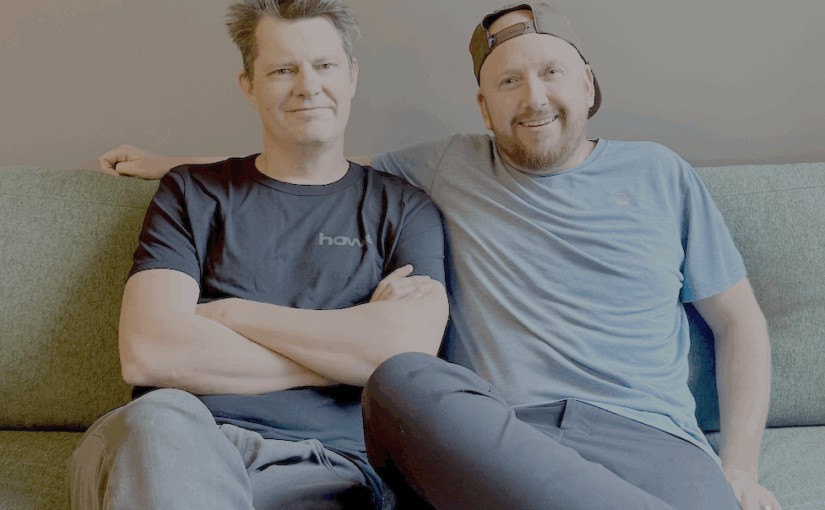
Founded by Austin Petersmith and Dave Newman, the team initially developed the concept in 2015, recognizing the right market opportunity now. The nine-person team includes experienced founders and alumni from Y Combinator. The company has experienced impressive growth, with monthly recurring revenue and usage increasing by an average of 50% month-over-month as of 2025.