Amazon’s Massive Investment in Government AI Infrastructure

Amazon is set to invest up to $50 billion in a significant expansion of its AI and advanced computing infrastructure, specifically tailored for U.S. government agencies.

This ambitious project, slated to begin in 2026, will dramatically increase Amazon Web Services’ (AWS) data center capacity across Top Secret, AWS Secret, and AWS GovCloud (US) regions – environments designed for handling classified and sensitive workloads.

Federal agencies will gain access to powerful AI tools, including Amazon SageMaker for custom model training and Amazon Bedrock for deploying and managing AI models, as well as building advanced agents.

The new centers will be equipped with Amazon’s proprietary Trainium AI chips, alongside NVIDIA hardware, enabling a substantial boost in computing power.

This investment aims to accelerate breakthroughs in government operations, spanning scientific research, intelligence analysis, and critical decision-making in areas such as disaster response and climate modeling. As stated by AWS CEO Matt Garman, “Our investment in purpose-built government AI and cloud infrastructure will fundamentally transform how federal agencies leverage supercomputing.” Amazon first introduced government-specific cloud infrastructure in 2011 and now supports over 11,000 government agencies worldwide.
Washington Lawmakers Consider AI Bargaining Rights for Public Employees

Washington state lawmakers are set to revisit the possibility of requiring government employers to bargain with public sector unions over the adoption of artificial intelligence technology. House Bill 1622 aims to mandate this bargaining if AI affects wages or worker performance evaluations.

The bill, championed by Rep. Lisa Parshley, previously stalled in the Senate after initial support in the House. Opponents, including business groups and city officials, argued the measure would skew the balance of power and potentially delay workplace innovation.

‘Public sector bargaining covers wages, hours and working conditions and agencies are already required to bargain any change that touches those areas, but without legislation, that bargaining happens after implementation,’ said Washington State Labor Council President April Sims. ‘With legislation like House Bill 1622, it would happen before.’

A September directive from the state’s Office of Financial Management requires union-represented state employees six months’ notice of any use of generative AI if it ‘will result in a consequential change in employee wages, hours, or working conditions.’

The debate reflects a broader conversation about a federal versus state approach to regulating AI. While President Donald Trump is reportedly considering an executive order to sue states that pass AI regulations, Washington state’s focus is on incorporating worker input into the process. This includes establishing human review for systems used in employment-related decisions.

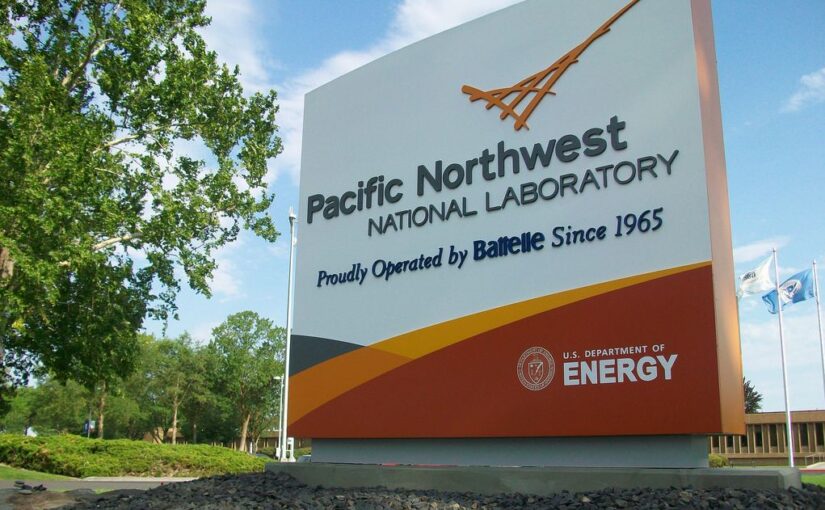
PNNL Layoffs Impact 68 Employees in Pacific Northwest

Battelle Memorial Institute, the government contractor responsible for Pacific Northwest National Laboratory (PNNL), is announcing layoffs affecting 68 employees across various sites in the Pacific Northwest, primarily in Washington state. The news was revealed through a Worker Adjustment and Retraining Notification (WARN) filing submitted to the state’s Employment Security Department. The affected positions are scheduled to conclude between November 18th and December 1st.

In the WARN letter, Battelle cited ‘unforeseen business circumstances’ as the reason for not providing 60-day notices to impacted workers. The company explained that funding uncertainties and evolving federal mission priorities led to this decision. Battelle attempted to mitigate the situation by reassigning work, reducing employee hours, and utilizing furlough status, hoping for additional funding to materialize. However, a workforce restructuring and subsequent staff reduction were deemed necessary across both research and operational areas.

Of the 68 employees impacted, 42 are based at PNNL’s main campus in Richland, Washington; three are located in Seattle; three in Oregon; and 20 are working remotely. PNNL, a 60-year-old institution managed by the U.S. Department of Energy, employed approximately 6,400 individuals last year. The laboratories conduct fundamental research in fields such as energy, chemistry, data analytics, and other scientific and technological disciplines.

These layoffs follow a previous reduction in staff announced this summer, with Battelle citing budget uncertainty. In September, the company also reduced medical benefits for retirees, as reported by the Tri-City Herald. U.S. Sen. Patty Murray, D-Wash., previously reported in February that a small number of PNNL employees were affected during the Trump administration’s initial government workforce reductions. These cuts were linked to initiatives like the Department of Government Efficiency (DOGE), previously led by Elon Musk, and executive orders related to climate change and diversity, equity, and inclusion efforts.

Affected employees held roles including national security specialist, software, mechanical, nuclear or systems engineer, cybersecurity researcher, data scientist, project manager, administrative coordinator, and other similar positions.