Sam Ransbotham on Navigating the Nuances of AI: Beyond Hype and Mediocrity

Sam Ransbotham, a professor of business analytics at Boston College and host of the ‘Me, Myself and AI’ podcast, offers a pragmatic perspective on the evolving role of Artificial Intelligence. He observes a fascinating trend in his classroom: while some students are leveraging AI to achieve remarkable results, others fall into the trap of ‘phoning things into the machine,’ leading to a superficial engagement with the technology. Ransbotham emphasizes that the depth of understanding a user possesses directly correlates with the value derived from a tool. A cursory approach yields a rudimentary outcome, while deeper exploration unlocks greater potential.

Despite concerns about students prioritizing mediocrity—highlighting Boston College’s ‘Ever to Excel’ motto—Ransbotham maintains a positive outlook on AI’s potential. He argues that the technology’s true value often lies not in its output, but in the critical thinking it inspires. ‘The data gives better insights about what you’re doing, about the documents you have, and you can make a slightly better decision,’ he states, emphasizing the importance of questioning AI’s outputs, even when they seem ‘wrong’ or ‘ridiculous.’

Ransbotham draws parallels between the rise of Wikipedia and the current AI landscape. Just as Encyclopedia Britannica’s economic value diminished with the advent of Wikipedia, AI’s value extends beyond immediate, quantifiable results. He focuses on the ability of AI to provide new insights and encourage deeper analysis, framing the technology as a tool for ‘searching for the signal in the noise.’ Ultimately, Ransbotham advocates for a thoughtful and discerning approach to AI, recognizing its potential while guarding against the temptation of simply accepting superficial outcomes.

Washington’s Quantum Ambitions: A Strategic Push for Growth

Washington faces a quantum paradox: despite possessing key ingredients – including tech giants like Microsoft and Amazon, the hardware leader IonQ, and world-class research at UW and PNNL – it risks falling behind states actively advancing quantum technology. Experts emphasize the need for a faster strategy and targeted investment to bolster the region’s quantum ecosystem.

Panelists at a recent Tech Alliance event in Seattle highlighted the urgency. Representative Stephanie Barnard advocated for a $100 million injection, stating, “It takes courage. It takes dynamic leadership. It takes a political will to recognize the needs of this state.” However, budgetary constraints pose a significant challenge, with Beau Perschbacher, policy advisor to Governor Bob Ferguson, noting that substantial new investments are currently “very hard” to secure.

States like Illinois – with Governor J.B. Pritzker earmarking $500 million – and Colorado are aggressively pursuing quantum strategy and workforce investment. Suggestions include shifting priorities away from established industry subsidies and exploring options such as a $300 million investment in quantum research over 10 years.

University of Washington professor Charles Marcus emphasized the importance of a focused approach, stating, “Quantum researchers will ‘go to where the funding is and where the environment favors success.’” He called for industry support of a dedicated master’s program to generate a skilled workforce. Marcus described the quantum race as one “in which, if you’re standing still, you’re going backwards.”

Laura Ruderman, CEO of Tech Alliance, suggested scaling existing efforts rather than initiating new initiatives. She referenced the Northwest Quantum Nexus (NQN), founded in 2019 by UW, Microsoft, and PNNL. IonQ CMO Margaret Arakawa urged leaders to publicly prioritize quantum and engage private funding partners, pointing to states with visible leadership in the field.

Startup Radar: Огляд 5 нових стартапів з Сіетла

Сіетлські підприємці працюють над покращенням комунікації в космосі, підбором персоналу, маркетингом ресторанів, сталим виробництвом ювелірних виробів та пошуком чудового вина. Ми повертаємося з останньою «Startup Radar», нашим регулярним фокусуванням на перспективних стартапах на ранній стадії з району Сіетла. Продовжуйте читати, щоб отримати короткі описи кожної компанії — і оцінку від «Mean VC», яка використовує штучний інтелект, щоб надати як позитивний, так і критичний зворотний зв’язок. Перегляньте попередні публікації Startup Radar тут, і надішліть мені електронний лист за адресою [email protected] щоб відзначити інші компанії або новини про стартапи.

Aetheon
Засновано: 2025
Бізнес: Платформа для підбору робочих місць, призначена для відображення реальних можливостей у роботі до можливостей. Їхнє програмне забезпечення перекладає життєвий досвід — такий як військова служба, догляд за дитиною або громадська робота — на ринково-готові навички. Aetheon співпрацює з організаціями, включаючи Світовий економічний форум і програму «Harvard’s Human Flourishing», щоб провести пілотні програми з-за допомогою своєї системи інтелекту навичок. Стартап зібрав 550 000 доларів.

Лідерство: Засновник і генеральний директор Мері Гіл була виконуваним директором у Executive Networks, Concertus і Modifi. Вона також керує Альянсом «Green Apron» від випускників Starbucks. Ко-засновники — Ґіна Дженерукс, 37-річний ветеран BMO Financial Group, і засновник та лідер продукту Марк Вейман.
Mean VC: «У вас є справжні партнери та перевірені оператори, але в переповненому «skills» просторі вам потрібно показати, де ви виграєте (сегмент, дані чи робочий процес), і надати твердих доказів того, що пілотні програми перетворюються на великі та повторювані контракти.»

Constellation
Засновано: 2025
Бізнес: Програмне забезпечення для космічної комунікації, яке допомагає операторам супутників уникнути втрати цінних даних місії, прогнозуючи, коли з’єднувальний кабель про супутник наблизиться до провалу. Їхня система виявляє проблему на ранній стадії та автоматично перенаправляє дані через кращий канал. Constellation тестує свою технологію з оборонними та промисловими партнерами.

Лідерство: Засновник і генеральний директор Камаран Маджід був колишнім інженером програмного забезпечення у SpaceX і Xplore. Інші ко-засновники — Раїд Кабір, колишній інженер Prudential Financial і Blue Origin; Омеед Техрані, інженер програмного забезпечення у Capital One; і Лаїт Альтарабіші, також інженер програмного забезпечення у Capital One.

Mean VC: «Проблема і команда виглядають міцно, але якщо ви не можете довести швидку інтеграцію, щиру готовність платити та розширення всередині операторів, це ризикує бути використане як корисна надійність, а не як окрему компанію.»

Feedia
Засновано: 2025
Бізнес: Штучний інтелект-менеджер для маркетингу, який допомагає невеликим незалежним ресторанам автоматизувати їхній цифровий маркетинг, зменшувати витрати та економити час. Стартап прагне надати підтримку іммігрантським власникам ресторанів, які часто залишаються поза увагою через мовні бар’єри. Feedia має 15 пілотних користувачів і планує розпочати пробні підписки на оплату наступного кварталу.

Лідерство: CEO Дeyi (Robert) Zhu є власником ресторану швидкого обслуговування Master Bing у Сіетлі. Раніше він працював у ролях з питань бізнес-розвитку у SprintiQ і Beejern. Ко-засновник Дексуан Zhu є старшим інженером у Sea Group у Сінгапурі.

Mean VC: «Підтримка засновників і фокус на іммігрантів є чудовим, але без чіткого, кількісно оціненого впливу на дохід або час, заощаджений, і з вузьким, чітким основним сценарієм, ви наллєтесь в шум загальних інструментів «AI для SMB маркетингу».

Redyoos
Засновано: 2024
Бізнес: Циркулярна система переробки ювелірних виробів, яка відновлює цінні метали з використаних ювелірних виробів і повертає їх у ланцюжок поставок. Компанія співпрацює з групами, такими як Goodwill, Armoire, Starbucks, Dress for Success і Phoenix Tailings, і розробляє штучний інтелект-продукт для оцінки ювелірних виробів. Redyoos є безкоштовним, і вони генерують дохід.

Лідерство: Засновник і генеральний директор Клео Ескарез був головним операційним директором Boma Silver Jewelry і колишнім менеджером бренду у Starbucks. Mean VC: «Циркулярний ювелірний кут і партнерства обіцяють, але ваша вся історія залежить від того, чи зможете ви перевершити існуючі канали переробки за одиницю економіки та зробити штучний інтелект-продукт необхідним, а не декоративним».

Theodora
Засновано: 2022
Бізнес: Надає випадковим любителям вина персоналізовані рекомендації, керовані відповідями про їхній смак і бюджет. Theodora пропонує пляшку на основі того, що є доступним у поблизькому магазині. Компанія є безкоштовною і нещодавно запустила свій iOS-додаток на цій тижні.

Лідерство: Засновник і генеральний директор Джес Тевенез був колишнім аналітиком даних у Flockjay, Hellosaurus і CDC Group.

Mean VC: «Споживачева проблема є зрозумілою, і ваші рекомендації, засновані на магазинах, логічні, але вам все ще потрібно довести «sticky» повторне використання та шлях до монетизації цінності торговця або бренду, щоб ви не наллєтесь в шум короткочасних додатків для вина».

Aquagga: Innovating Solutions to Tackle ‘Forever Chemicals’

Editor’s note: This series profiles six of the Seattle region’s “Uncommon Thinkers”: inventors, scientists, technologists and entrepreneurs transforming industries and driving positive change in the world. They will be recognized Dec. 11 at the GeekWire Gala. Uncommon Thinkers is presented in partnership with Greater Seattle Partners.

After earning his bachelor’s degree in mechanical engineering, Brian Pinkard spent six months “flipping rocks,” as he describes it, in Colorado’s Rocky Mountains. The rock-flipping was purposeful work: Pinkard was clearing obstructions and building trails for AmeriCorps, spending every night in a tent. “I loved it. It was great. And the reason I did that is because I wanted to do something that mattered, that made a difference in the world,” he said. When the program ended, he was inspired to direct his impact to a larger environmental challenge.

His passion to do good, paired with an engineer’s drive for problem solving, led him to a doctoral degree from the University of Washington and then to launching Aquagga, a startup that’s destroying PFAS — a toxic class of pollutants known as “forever chemicals.” “Brian has been very laser focused on his mission,” said Igor Novosselov, Pinkard’s PhD advisor and research professor at the UW’s Department of Mechanical Engineering. “He’s not a typical scientist who would just go and write a bunch of papers. He’s going after impact where it matters.”

But a few steps before PFAS, Pinkard was focused on nerve gas in the Middle East. When Pinkard joined Novosselov’s lab, it had U.S. Department of Defense funding to develop an in-the-field, mobile strategy for treating barrels of abandoned chemical weapons in the Syrian desert. The previous solution was to truck the barrels to the Mediterranean Sea, load them on a boat and incinerate the material. “If you’re the guy who’s got to transport a nerve agent,” Pinkard noted, “it’s not a very good job.”

Within five years, the lab came up with a workable solution, but the need was no longer urgent and DoD shelved its application of the technology, though Novosselov continued to work on it.

Pinkard appreciated the tremendous power of the strategy for treating dangerous materials and wondered if there was another use case. Then as he was preparing to finish his PhD in June 2020, the COVID pandemic hit, derailing his plans to apply for a university postdoctoral fellowship as no one was hiring. So he made a pivot to entrepreneurship — a role he had never considered. Pinkard teamed up with engineer and tech innovator Nigel Sharp to explore the potential for using the tech, called supercritical water oxidation, to treat sewage sludge from wastewater treatment plants, but they realized the market wasn’t viable.

There was, however, buzz about PFAS. “Everybody was talking about PFAS,” he said, and if anyone could figure out how to destroy the chemicals, it would be a breakthrough. That realization became his lightbulb moment. PFAS is a family of chemicals that for decades have been added to firefighting foams, food packaging, carpets and fabrics, water-repellent clothing and non-stick pans. The resilient chemicals are great at deflecting water, stains and grease — but they escape from products and now contaminate drinking water across the nation and are even in mothers’ breast milk. PFAS are still in use, while researchers and regulators are increasingly concerned by their serious health impacts.

Pinkard and Sharp launched Aquagga in 2019 in Tacoma, Wash., and were soon joined by co-founder Chris Woodruff. The team kept the idea of modular treatment units but shifted to a related but different chemistry (hydrothermal alkaline treatment) for destroying PFAS, securing a patent for the approach from the Colorado School of Mines. “Brian has been a great partner from the beginning,” said Timothy Strathmann, a Colorado School of Mines professor. “Unlike many entrepreneurs I’ve interacted with, he is also deeply interested in understanding the limitations and technical challenges associated with the technology. He’s keenly aware that the long-term success of Aquagga will only be achieved by addressing the critical barriers to deployment.”

Aquagga’s devices annihilates PFAS under super hot, high pressure conditions made caustic and corrosive through the addition of lye. The company has done nine field demonstrations of its technology, including a project at an airport in Alaska, a DoD-funded project in North Carolina involving firefighting foams, and a wastewater demo with the City of Tacoma. It’s now close to signing its first long-term commercial deployment, Pinkard said, “which will be a huge milestone for us.”

“It’s really cool to see how much PFAS we’ve destroyed … even in our short journey,” Pinkard said. “And to think about where it could go, what it could enable at scale. So [I’m] very optimistic about Aquagga’s future. I’m very optimistic about the impact we could create, the lives we could save.”

University of Washington Secures $10 Million Investment to Lead AI Integration in Education

The University of Washington has announced a significant $10 million donation from Microsoft pioneer Charles Simonyi and his wife, Lisa Simonyi, to launch ‘AI@UW,’ a university-wide initiative focused on responsibly and effectively integrating artificial intelligence into the classroom and research endeavors.

This generous gift establishes a new Vice Provost for Artificial Intelligence, with Professor Noah Smith of the Paul G. Allen School of Computer Science & Engineering taking on the inaugural role. Professor Smith emphasized the substantial expertise surrounding smart AI adoption at the UW and his aim to connect and leverage this knowledge to accelerate learning and innovation.

Faculty members are actively seeking guidance as students increasingly utilize AI tools. A primary concern is understanding how to respond to this shift in student behavior. ‘My students are using AI. What now? What am I supposed to do? How do we respond to this?’ Professor Smith stated, highlighting the need for strategic adaptation.

The University’s approach involves AI assisting students with questions and study materials, while ensuring students retain responsibility for their education. On the faculty side, AI can support the creation of fair and effective assessments. A key component of AI@UW is the SEED-AI grant program, designed to fund innovative and exploratory uses of AI in courses, with the call for proposals expected in the coming weeks.

Three key focus areas are being prioritized: ensuring academic excellence, advancing research, and fostering innovation. University President Robert Jones believes the initiative and new vice provost role will maintain the university’s strategic advantage in AI. ‘We need somebody that wakes up each and every day that thinks about AI across the three parts of our mission: our teaching, our research and our innovation agenda,’ Jones said.

Charles and Lisa Simonyi have previously donated over $27.5 million to the UW since 2009, supporting DIRAC, the Ana Mari Cauce Welcome Center, and the Allen School building. Charles Simonyi, a technical fellow at Microsoft, and Lisa Simonyi, chair of the UW Foundation Board, are instrumental in this groundbreaking initiative. Professor Smith’s affiliations also span multiple departments, including the Department of Linguistics, the Center for Statistics and the Social Sciences, the eScience Institute, and the Stroum Center for Jewish Studies, providing invaluable cross-disciplinary experience.

Amazon’s Surprise Indie Hit: Kiro Launches Broadly in Bid to Reshape AI-Powered Software Development

Can the software development hero conquer the “AI Slop Monster” to uncover the gleaming, fully functional robot buried beneath the coding chaos?

That was the storyline unfolding inside a darkened studio at Seattle Center last week, as Amazon’s Kiro software development system was brought to life for a promotional video. Instead of product diagrams or keynote slides, a crew from Seattle’s Packrat creative studio used action figures on a miniature set to create a stop-motion sequence. In this tiny dramatic scene, Kiro’s ghost mascot played the role that the product aims to fill in real life — a stabilizing force that brings structure and clarity to AI-assisted software development.

No, this is not your typical Amazon Web Services product launch.Kiro (pronounced KEE-ro) is Amazon’s effort to rethink how developers use AI. It’s an integrated development environment that attempts to tame the wild world of vibe coding, the increasingly popular technique that creates working apps and websites from natural language prompts.

But rather than simply generating code from prompts, Kiro breaks down requests into formal specifications, design documents, and task lists. This spec-driven development approach aims to solve a fundamental problem with vibe coding: AI can quickly generate prototypes, but without structure or documentation, that code becomes unmaintainable.

It’s part of Amazon’s push into AI-powered software development, expanding beyond its AWS Code Whisperer tool to compete more aggressively against rivals such as Microsoft’s GitHub Copilot, Google Gemini Code Assist, and open-source AI coding assistants.

The market for AI-powered development tools is booming. Gartner expects AI code assistants to become ubiquitous, forecasting that 90% of enterprise software engineers will use them by 2028, up from less than 14% in early 2024. A July 2025 report from Market.us projects the AI code assistant market will grow from $5.5 billion in 2024 to $47.3 billion by 2034.

Amazon launched Kiro in preview in July, to a strong response. Positive early reviews were tempered by frustration from users unable to gain access. Capacity constraints have since been resolved, and Amazon says more than 250,000 developers used Kiro in the first three months.

The internet is “full of prototypes that were built with AI,” said Deepak Singh, Amazon’s vice president of developer agents and experiences, in an interview last week. The problem, he explained, is that if a developer returns to that code two months later, or hands it to a teammate, “they have absolutely no idea what prompts led to that. It’s gone.”

Kiro solves that problem by offering two distinct modes of working. In addition to “vibe mode,” where they can quickly prototype an idea, Kiro has a more structured “spec mode,” with formal specifications, design documents, and task lists that capture what the software is meant to do.

Now, the company is taking Kiro out of preview into general availability, rolling out new features and opening the tool more broadly to development teams and companies.

As a product of Amazon’s cloud division, Kiro is unusual in that it’s relevant well beyond the world of AWS. It works across languages, frameworks, and deployment environments. Developers can build in JavaScript, Python, Go, or other languages and run applications anywhere — on AWS, other cloud platforms, on-premises, or locally.

That flexibility and broader reach are key reasons Amazon gave Kiro a standalone brand rather than presenting it under the AWS or Amazon umbrella. It was a “very different and intentional approach,” said Julia White, AWS chief marketing officer, in an interview at the video shoot. The idea was to defy the assumptions that come with the AWS name, including the idea that Amazon’s tools are built primarily for its own cloud.

White, a former Microsoft and SAP executive who joined AWS as chief marketing officer a year ago, has been working on the division’s fundamental brand strategy and calls Kiro a “wonderful test bed for how far we can push it.” She said those lessons are starting to surface elsewhere across AWS as the organization looks to “get back to that core of our soul.”

With developers, White said, “you have to be incredibly authentic, you need to be interesting. You need to have a point of view, and you can never be boring.” That philosophy led to the fun, quirky, and irreverent approach behind Kiro’s ghost mascot and independent branding. The marketing strategy for Kiro caused some internal hesitation, White recalled. People inside the company wondered whether they could really push things that far.

Her answer was emphatic: “Yep, yep, we can. Let’s do it.”

Amazon’s Kiro has caused a minor stir in Seattle media circles, where the KIRO radio and TV stations, pronounced like Cairo, have used the same four letters stretching back into the last century. People at the stations were not exactly thrilled by Amazon’s naming choice. With its core audience of developers, however, the product has struck a nerve in a positive way. During the preview period, Kiro handled more than 300 million requests and processed trillions of tokens as developers explored its capabilities, according to stats provided by the company. Rackspace used Kiro to complete what they estimated as 52 weeks of software modernization in three weeks, according to Amazon executives. SmugMug and Flickr are among other companies espousing the virtues of Kiro’s spec-driven development approach. Early users are posting in glowing terms about the efficiencies they’re seeing from adopting the tool.

Kiro uses a tiered pricing model based on monthly credits: a free plan with 50 credits, a Pro plan at $20 per user per month with 1,000 credits, a Pro+ plan at $40 with 2,000 credits, and a Power tier at $200 with 10,000 credits, each with pay-per-use overages. With the move to general availability, Amazon says teams can now manage Kiro centrally through AWS IAM Identity Center, and startups in most countries can apply for up to 100 free Pro+ seats for a year’s worth of Kiro credits.

New features include property-based testing — a way to verify that generated code actually does what developers specified — and a new command-line interface in the terminal, the text-based workspace many programmers use to run and test their code. A new checkpointing system lets developers roll back changes or retrace an agent’s steps when an idea goes sideways, serving as a practical safeguard for AI-assisted coding.

Amit Patel, director of software engineering for Kiro, said the team itself is deliberately small — a classic Amazon “two-pizza team.” And yes, they’ve been using Kiro to build Kiro, which has allowed them to move much faster. Patel pointed to a complex cross-platform notification feature that had been estimated to take four weeks of research and development. Using Kiro, one engineer prototyped it the next day and shipped the production-ready version in a day and a half.

Patel said this reflects the larger acceleration of software development in recent years. “The amount of change,” he said, “has been more than I’ve experienced in the last three decades.”

AI Startup BluePill Raises $6 Million to Revolutionize Brand Research with Simulated Focus Groups

Seattle-based AI startup, BluePill, has secured $6 million in seed funding to transform how brands understand consumer behavior. The round was led by Ubiquity Ventures, with participation from Pioneer Square Labs and Flying Fish Partners.

Launched earlier this year, BluePill leverages artificial intelligence to simulate consumer reactions to marketing concepts, products, and designs – offering brands near-instant feedback instead of relying on traditional, time-consuming focus groups.

The company builds tailored AI consumer audiences for each brand, utilizing real-world data like social media conversations, surveys, and customer input, mirroring the brand’s target demographic.

Users upload their ideas to the platform and receive immediate predictions of their audience’s response, effectively running a massive, virtual focus group.

BluePill is also developing pre-built, industry-specific AI audiences – such as “U.S. moms” or “Gen Z snack buyers” – allowing brands to directly query for insights without constructing custom models.

BluePill claims its simulated audiences achieve 93% accuracy compared to human panels. The company currently works with brands like Magic Spoon, Kettle & Fire, and the Seattle Mariners, utilizing the platform to test fan engagement and in-stadium activations.

“Our edge is validated, accurate insights – and the fact that we deliver these in minutes for a fraction of the cost makes it a no-brainer,” stated BluePill founder and CEO Ankit Dhawan.

BluePill is already generating revenue through a fixed annual subscription model.

The startup is challenging established marketing research giants like Ipsos, Qualtrics, and Nielsen, which traditionally depend on lengthy, costly human panels. Dhawan highlighted that newer startups increasingly utilize large language models to mimic consumer responses.

Dhawan’s background includes experience as an entrepreneur-in-residence at the Allen Institute for AI (Ai2) and a previous role as a product leader at Amazon, specializing in AI products.

Key team members include Puneet Bajaj and Andy Zhu. BluePill recently garnered attention in GeekWire’s Startup Radar in June.

Sunil Nagaraj, a founding partner at Ubiquity Ventures, emphasized that “predicting consumer behavior is the holy grail of marketing.” Nagaraj, based in Silicon Valley, is an active participant in the Seattle startup ecosystem and was an early investor in Auth0, which Okta acquired for $6.5 billion.

AI-Powered Efficiency and Safety in Corrections

As we mark Cybersecurity Awareness Month, it’s important to recognize the opportunities and safeguards that come with emerging technologies. In the field of corrections, AI is beginning to help facilities work smarter, not harder, by supporting staff who manage complex workloads, staffing shortages, and budget constraints.

In day-to-day facility operations, that means streamlining case routing, reducing paperwork bottlenecks, and giving officers back valuable time for investigations and direct engagement. When thoughtfully designed, AI can reduce the strain on limited resources, streamline administrative processes, and help identify risks earlier. The result is a more efficient, responsive system where officers can focus on what matters most: safety, rehabilitation, and human connection.

Every meaningful technology advancement starts with listening. For correctional facilities, that means understanding the realities of those who keep operations running, from correctional officers and case managers to IT teams and administrators. Each faces distinct challenges: managing staff shortages, heavy caseloads, and time-consuming reporting requirements. When we listen to these perspectives, patterns emerge. For example, staff often cite time and paperwork as their biggest barriers, not willingness to innovate.

By engaging with officers and administrators early and often, technology partners can design tools that fit within existing workflows rather than disrupt them. Officers might identify that incident reports take hours to compile, or administrators might flag data silos that slow investigations. With that input, AI solutions can be tailored to reduce those pain points to automating reports, flagging relevant cases faster, and consolidating data for easier review. When officers see that their feedback directly shapes the tools they use, adoption and trust grow naturally.

Listening also extends beyond product design to implementation and training. Every facility has its own culture, infrastructure, and pace of change. By involving staff in testing and iteration, organizations ensure AI complements human judgment, supports compliance, and respects privacy. The goal isn’t to introduce technology for technology’s sake, but to co-create solutions that remove friction, enhance safety, and give officers back valuable time.

AI can streamline routine tasks and summarize data, duties that once required hours of manual review. Investigative workflows benefit from automated alerts, consolidated reporting, and smarter case management tools. Facilities using AI in this way often see:

Tech Worker’s ‘Beautiful and Spooky’ Artwork: A Unique Blend of Science and Art

From Oracle Cloud Infrastructure to Artistic Creator

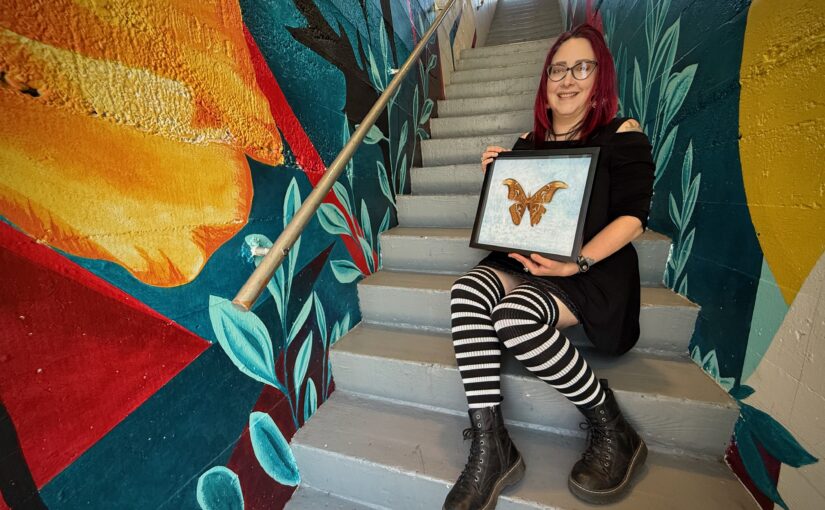
Bergen McMurray, a Principal Technical Program Manager at Oracle Cloud Infrastructure in Seattle, pursues a fascinating passion outside of her professional life: creating captivating wall art using scientific specimens – insects, bones, and butterflies.

McMurray’s background is deeply rooted in the Seattle tech and science landscape. She’s held positions at the Allen Institute for Brain Science, her own biotech startup, HiveBio, and Tableau Software. At Oracle, she focuses on workflow management, system design, and automation.

Ebb & Bone: A Collaborative Artistic Journey

Alongside her tech work, McMurray collaborates with Bevin Duncan as Ebb & Bone. This artistic partnership regularly exhibits their unique creations at art shows and festivals. Their artwork features meticulously framed spiders, butterflies, beetles, cockroaches, small mammal skulls, snake skeletons, and other upcycled objects sourced from the woods or reclaimed from decommissioned entomology collections.

The Philosophy Behind the Art

McMurray expresses a profound love for the juxtaposition of beauty and spookiness. “We call it dead things art,” she states, emphasizing her commitment to ethically and sustainably sourcing her materials and avoiding the exploitation of living creatures.

A Shift in Perspective

What McMurray finds most rewarding is the ability to encourage viewers to reconsider their perceptions. The experience of observing a giant spider or a detailed animal skull can be surprisingly unsettling, prompting a deeper appreciation for the beauty hidden within the unexpected.

Skills Transferred to Work

Like many tech professionals, McMurray spends considerable time working at a computer. Her artistic endeavor offers her a tangible outlet to create and touch, while simultaneously honing her problem-solving skills. Addressing the presentation of a rabbit skull artfully or sourcing insects sustainably provides valuable insights that she applies to her work as a program manager.

Unexpected Connections

Beyond the creative process, McMurray values the opportunity to engage in unconventional conversations with others, further developing her social skills and influencing abilities.

Do you have an out-of-office hobby or interesting side hustle that you’re passionate about that would make for a fun profile on GeekWire? Drop us a line: [email protected].

Новий президент TiE Seattle занепокоєний щодо нового $100 тисяч H-1B візи та його впливу на стартапи

Сону Аггарвал, один з багатьох підприємців і лідерів технологічного сектору, який виростав за кордоном та іммігрував до США для запуску стартапів та роботи в американських компаніях, таких як Microsoft, став новим президентом TiE Seattle. Він висловлює занепокоєння щодо впливу нової $100 тисяч H-1B візи, яка була впроваджена Президентом Дональдом Трампом минулого тижня.

H-1B візи дозволяють компаніям наймати висококваліфікованих іноземних працівників у «спеціальних професіях», таких як розробка програмного забезпечення. Серед тих, хто використовував цю візу для переїзду до США, – генеральний директор Microsoft Сатя Надела та генеральний директор Alphabet Сундар Пічаї.

Білий дім стверджує, що програма H-1B була експлуатована аутсорсинговими фірмами, які замінюють американських працівників на працівників з нижчою зарплатою. Наразі компанії платять кілька тисяч доларів уряду за кожну заявку на H-1B візу. Додавання доплати у $100 тисяч за працівника було б безпрецедентним.

Нова плата особливо зачепить сеаттський технологічний сектор. Amazon (10,044) та Microsoft (5,189) займають відповідно 1-е та 3-є місця за схвалення H-1B віз працівникам цього року. Сеаттський район також має одну з найбільших азійсько-інڈینських популяцій у США. Більше ніж 40% іноземних IT-працівників у Сеатті походять з Індії, згідно з повідомленням Seattle Times у 2018 році.

Аггарвал, який виріс в Індії, був засновником TiE Seattle, який був заснований у 2000 році як мережа з коренями у спільноті Південної Азії, щоб підтримувати та просувати підприємництво в сеаттській екосистемі стартапів. Члени TiE Seattle спільно створили понад 16 мільярдів доларів ринкової вартості через стартапи, які вони заснували. Нова H-1B віза особливо зашкодить меншим стартапам, які хочуть наймати талановитих працівників, але мають обмежений термін дії та кошти. Стартапи потребують передбачуваності. Радикальні зміни у процесі отримання H-1B візи можуть створювати перешкоди та відлякувати засновників від ризиків.

«Це підприємницький дух, ця енергія — це як полум’я, яке ви хочете підтримувати та живити. Такі речі мають здатність майже згасити цей вогонь». Після закінчення навчання в MIT Аггарвал заснував три стартапи — включаючи сеаттський стартап у сфері комунікацій Unify Square, який був придбаний Unisys за понад 152 мільйони доларів у 2021 році.

Аггарвал сказав, що якби не було «довготривалої передбачуваної бізнес-середовища», він не вирішив би займатися підприємництвом і запускати свій стартап (Flash Communications), який був придбаний Microsoft. «Я б просто продовжував працювати в корпорації після закінчення навчання». Аггарвал, який зараз працює над новим AI-стартапом, сказав, що TiE Seattle продовжуватиме підтримувати підприємців, які орієнтуються на мінливі візові політики, а також розширювати свій діапазон, щоб обслуговувати ширшу спільноту стартапів.

Він висловлює надію на те, щоб додати більше підприємницького духу до сеаттської екосистеми. «У нас є можливість… щоб люди ризикували більше, мріяли більшими, щоб справді використати все, що ми маємо у нас в екосистемі, щоб створити велику цінність». Аггарвал замінює Прашанту Мішру, який керував TiE Seattle протягом останніх двох років. TiE Seattle є гілкою глобальної некомерційної організації TiE, яка має 15 000 членів у всьому світі.