Washington’s Quantum Ambitions: A Strategic Push for Growth

Washington faces a quantum paradox: despite possessing key ingredients – including tech giants like Microsoft and Amazon, the hardware leader IonQ, and world-class research at UW and PNNL – it risks falling behind states actively advancing quantum technology. Experts emphasize the need for a faster strategy and targeted investment to bolster the region’s quantum ecosystem.

Panelists at a recent Tech Alliance event in Seattle highlighted the urgency. Representative Stephanie Barnard advocated for a $100 million injection, stating, “It takes courage. It takes dynamic leadership. It takes a political will to recognize the needs of this state.” However, budgetary constraints pose a significant challenge, with Beau Perschbacher, policy advisor to Governor Bob Ferguson, noting that substantial new investments are currently “very hard” to secure.

States like Illinois – with Governor J.B. Pritzker earmarking $500 million – and Colorado are aggressively pursuing quantum strategy and workforce investment. Suggestions include shifting priorities away from established industry subsidies and exploring options such as a $300 million investment in quantum research over 10 years.

University of Washington professor Charles Marcus emphasized the importance of a focused approach, stating, “Quantum researchers will ‘go to where the funding is and where the environment favors success.’” He called for industry support of a dedicated master’s program to generate a skilled workforce. Marcus described the quantum race as one “in which, if you’re standing still, you’re going backwards.”

Laura Ruderman, CEO of Tech Alliance, suggested scaling existing efforts rather than initiating new initiatives. She referenced the Northwest Quantum Nexus (NQN), founded in 2019 by UW, Microsoft, and PNNL. IonQ CMO Margaret Arakawa urged leaders to publicly prioritize quantum and engage private funding partners, pointing to states with visible leadership in the field.

University of Washington Secures $10 Million Investment to Lead AI Integration in Education

The University of Washington has announced a significant $10 million donation from Microsoft pioneer Charles Simonyi and his wife, Lisa Simonyi, to launch ‘AI@UW,’ a university-wide initiative focused on responsibly and effectively integrating artificial intelligence into the classroom and research endeavors.

This generous gift establishes a new Vice Provost for Artificial Intelligence, with Professor Noah Smith of the Paul G. Allen School of Computer Science & Engineering taking on the inaugural role. Professor Smith emphasized the substantial expertise surrounding smart AI adoption at the UW and his aim to connect and leverage this knowledge to accelerate learning and innovation.

Faculty members are actively seeking guidance as students increasingly utilize AI tools. A primary concern is understanding how to respond to this shift in student behavior. ‘My students are using AI. What now? What am I supposed to do? How do we respond to this?’ Professor Smith stated, highlighting the need for strategic adaptation.

The University’s approach involves AI assisting students with questions and study materials, while ensuring students retain responsibility for their education. On the faculty side, AI can support the creation of fair and effective assessments. A key component of AI@UW is the SEED-AI grant program, designed to fund innovative and exploratory uses of AI in courses, with the call for proposals expected in the coming weeks.

Three key focus areas are being prioritized: ensuring academic excellence, advancing research, and fostering innovation. University President Robert Jones believes the initiative and new vice provost role will maintain the university’s strategic advantage in AI. ‘We need somebody that wakes up each and every day that thinks about AI across the three parts of our mission: our teaching, our research and our innovation agenda,’ Jones said.

Charles and Lisa Simonyi have previously donated over $27.5 million to the UW since 2009, supporting DIRAC, the Ana Mari Cauce Welcome Center, and the Allen School building. Charles Simonyi, a technical fellow at Microsoft, and Lisa Simonyi, chair of the UW Foundation Board, are instrumental in this groundbreaking initiative. Professor Smith’s affiliations also span multiple departments, including the Department of Linguistics, the Center for Statistics and the Social Sciences, the eScience Institute, and the Stroum Center for Jewish Studies, providing invaluable cross-disciplinary experience.

Microsoft Розробляє ‘Agent 365’: Централізоване Управління Автономними AI Агентами

Microsoft розробляє ‘Agent 365’ – централізовану систему управління, яка дозволить компаніям ефективно управляти та захищати їхніх автономних AI агентів. Це рішення призначене для вирішення проблеми “тіньових” AI інструментів, які все частіше використовують працівники.

Під час конференції Ignite, Satya Nadella підкреслив, що компанія переходить на модель управління продуктами та інфраструктурою для автономних AI агентів, а не лише для людей. Основна ідея полягає в наданні унікального ідентифікатора кожному агенту.

‘Agent 365’ функціонує як центральний дашборд всередині Microsoft 365 Admin Center, забезпечуючи контроль за діяльністю агентів, включаючи агентів від Microsoft та інших компаній. Це дозволить компаніям використовувати існуючі системи безпеки для відстеження, контролю доступу та захисту від несанкціонованого доступу або витоку конфіденційної інформації.

Ця ініціатива відповідає на зростаючу проблему “тіньових” AI, коли співробітники використовують неконтрольовані AI інструменти. Оцінки аналітиків свідчать про очікуваний ріст ринку AI агентів до 1.3 мільярда одиниць до 2028 року, що прогнозується зростання з $7.8 млрд до понад $50 млрд до 2030 року. Google, Amazon та Salesforce також пропонують власні платформи для корпоративного використання.

‘Agent 365’ використовує Microsoft’s унікальну позицію в корпоративних системах ідентифікації та безпеки. Система інтегрується з Microsoft Entra (раніше Active Directory), забезпечуючи ідентифікацію кожного агента.

Microsoft, Nvidia, та Anthropic об’єднуються в грантовій інвестиційній угоді

У грантовій інвестиційній угоді Microsoft, Nvidia та Anthropic оголосили про співпрацю, яка передбачає інвестиції Microsoft в Anthropic на суму 5 мільярдів доларів США. У відповідь, Anthropic зобов’язалася витратити щонайменше 30 мільярдів доларів на хмарну платформу Microsoft Azure.

Nvidia, своєю чергою, планує інвестувати до 10 мільярдів доларів у Anthropic, щоб оптимізувати моделі Claude для своїх нових чипів Grace Blackwell та Vera Rubin.

Ця угода відображає тенденцію до співпраці між великими гравцями у сфері штучного інтелекту, спрямовану на розширення можливостей та доступ до новітніх моделей ШІ. Нещодавно Microsoft переглянула свою співпрацю з OpenAI та активно впроваджує партнерство з іншими компаніями.

Anthropic наразі користується підтримкою Amazon, який планує інвестувати загалом 8 мільярдів доларів у стартап. Amazon залишається основним хмарним постачальником та партнером з навчання моделей ШІ для Anthropic.

У рамках угоди Microsoft надасть користувачам доступ до моделей Claude Sonnet 4.5, Claude Opus 4.1 та Claude Haiku 4.5 через свою платформу Foundry. Також збережеться доступ до моделей Claude у Copilot family – GitHub Copilot, Microsoft 365 Copilot та Copilot Studio.

Microsoft’s ‘Superfactory’: A New Era of AI Infrastructure

Microsoft has unveiled a groundbreaking approach to data center design and operation, dubbed its ‘superfactory,’ focused on facilitating the training and deployment of advanced artificial intelligence models. This innovative system links massive data centers across vast distances – in this case, Wisconsin and Atlanta, approximately 700 miles apart – via a high-speed fiber-optic network.

The ‘superfactory’ represents a shift from traditional cloud data centers, which cater to numerous separate applications, to a unified architecture specifically engineered for single, massive AI workloads. Each facility incorporates hundreds of thousands of Nvidia GPUs connected through an AI Wide Area Network (AI-WAN) for real-time sharing of computing tasks.

Microsoft’s new two-story data center design maximizes GPU density and minimizes latency, aided by a closed-loop liquid cooling system. By pooling computing capacity across multiple sites and dynamically redirecting workloads, the system distributes power requirements efficiently across the grid.

This interconnected infrastructure will be utilized to train and run next-generation AI models for key partners, including OpenAI, and Microsoft’s own internal models. This development highlights the intense competition among major tech companies to build the necessary infrastructure for the rapidly expanding field of artificial intelligence.

Від танців до бізнесу: колишній менеджер Microsoft відкриває балетну школу та використовує свої навички

Adrienne Chan’s pivot away from a career in tech could more aptly be considered a pirouette. The former Microsoft product manager is the co-founder of a new ballet school in Redmond, Wash., where she’s reconnecting with the dancing she practiced growing up, and seizing on a desire to run her own business. “I knew I had to do this because I couldn’t stop thinking about it,” Chan told GeekWire. “I loved my job at Microsoft, and I wanted to do both … but 24/7 my mind was only thinking about the ballet school.”

Bellevue Classical Ballet opened in September in Redmond Town Center with a mission to serve students of all ages and skill levels. Chan is serving as executive director, and her co-founder, Eric Hipolito Jr., a former dancer and instructor with Pacific Northwest Ballet School, is artistic director. Chan first interned at Microsoft in 2017 before spending almost four years at the tech giant working on Azure products. She left in 2022 to get her Master of Science degree in entrepreneurship from the University of Washington before returning to Microsoft for another 11-month stint.

While at the UW, Chan utilized her engineering background and worked on a dance education app as part of her degree program. “Something still felt a little off for me,” she admitted. “I felt that maybe I wanted to stray a little bit more away from tech.” She met Hipolito and made the leap back into dancing. And along the way, she found tech was still a suitable partner. Chan grew up in Toronto and transitioned from gymnastics to ballet as a kid, falling in love with the art form at age 9 thanks to her teachers. She eventually took up other styles of dance in productions within the Chinese community in Toronto. She studied systems design engineering at the University of Waterloo in Ontario, and as an undergrad, her first internship was at a startup incubator. “I’ve never seen anything like that,” Chan said. “The drive that people have, the motivation — they just want to get work done. They’re so passionate. And that really sparked my interest in entrepreneurship.”

Her feelings were lining up with memories she had of a “career class” she took in high school where she had to list 10 things she might want to be when she grew up. Engineering was on the list. And so was CEO of a dance company. Although she wanted to pursue her master’s directly after undergrad, she had already committed to Microsoft and moved to Seattle to begin her career. Chan’s parents and others were a bit surprised when she left a high-paying tech job to go back to school, and even more so when she left that job again to open a ballet school. Even though she was touching products used by millions of people, Chan wasn’t connecting with those people on a day-to-day basis. She wasn’t using those products herself, and they didn’t align with her aspirations. “I really did enjoy my job at Microsoft, but I knew it wasn’t what I wanted long term,” she said. “I wanted something more meaningful, something that felt like I could make an impact on people.”

Chan is a big believer in the notion that everything has led her to where she is today. And she feels that her tech background is making an impact on the ways she thinks about running a small business — something she’s been writing about in posts on LinkedIn. “If I pursued dance in college, I don’t think I would be as successful doing this now,” she said. “I think that tech background really helped me do this.” Managing a product is a lot like managing a business, Chan said, calling out the ambiguity of both. At the ballet school, she finds herself leaning on the adaptability and decisiveness that helped her at Microsoft, and iterating as she goes — a mindset she calls very common in tech. But she’s not using AI. When she had to crunch 100 different schedule options for the school, Hipolito asked why she didn’t just throw all the variables into an AI model and ask for the best result. “I said, ‘No, I want to use my brain,’” Chan said. “I trust my brain.” Chan also chuckles at the irony of her life now — teaching the kids of Microsoft workers while some of those parents are outside her dance studio working on laptops, doing code reviews or whatever else. When people call her a risk-taker or commend her courage for the change she’s made, Chan doesn’t see it that way. “It’s stressful. But I’m stressing for what I really want to be doing, what really matters to me,” she said. “I don’t think that’s replaceable at all. I don’t think there’s any other option.”

Microsoft Розширює Можливості Співпраці з AI в Office

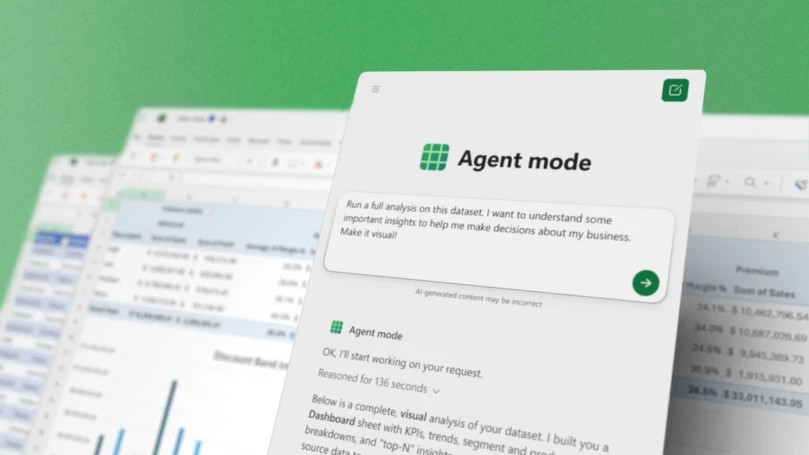
Microsoft продовжує інтегрувати можливості штучного інтелекту в свої продукти Office. Нова функція, «vibe working», спрямована на покращення співпраці між користувачами та AI-агентами, що дозволяє створювати, тестувати та вдосконалювати контент у Word, Excel та PowerPoint.

Microsoft 365 Commercial products and cloud services, which include the Office apps and Copilot for businesses, generated $87.8 billion in revenue in the 2025 fiscal year, ending in June, up 14% and second only to the company’s server products and cloud services business.

Функція «vibe working» передбачає взаємодію між людиною та AI-агентом, а не одноразову відповідь. Оновлені інструменти Copilot AI генерують, тестують та вдосконалюють контент, доки користувач визначає напрямок роботи.

Варто зазначити, що інструмент Microsoft 365 Commercial products and cloud services, which include the Office apps and Copilot for businesses, generated $87.8 billion in revenue in the 2025 fiscal year, ending in June, up 14% and second only to the company’s server products and cloud services business.

Seattle Tech Roundup: Key Stories from September 21, 2025

Catch up on the latest developments in the Seattle tech scene with this week’s top stories.

  • Layoffs and National Attention: The Wall Street Journal highlighted the impact of recent layoffs in Seattle, a city significantly reliant on Microsoft and Amazon.

  • Sila’s Manufacturing Facility: Next-generation battery materials startup Sila is commencing operations at its innovative automotive-scale manufacturing facility in Washington.

  • IShowSpeed’s Seattle Appearance: A notable event involving IShowSpeed drew attention in Seattle.

  • Microfluidics Cooling System: Microsoft unveiled a revolutionary microfluidics cooling system, inspired by leaf veins and utilizing AI to optimize data center efficiency.

  • Robotics and AI Discussions: GeekWire spoke with Srinivasa regarding the state of robotics, entrepreneurial opportunities, and Seattle’s potential as a global AI and robotics hub.

  • Natural Organic Reduction Expansion: Thirteen more states have followed Washington’s lead in legalizing natural organic reduction.

  • Reserve Roastery Closure: Starbucks closed its flagship Reserve Roastery in Capitol Hill, marking the end of an era for this unique coffee experience.

  • Mariners Broadcasting Shift: The Seattle Mariners are transitioning all broadcast production, carriage, and streaming to Major League Baseball starting in 2026.

  • Video Call Scheduling: A recent discussion centered around scheduling a video conference.

Microsoft Halts Support for Israeli Military Unit Over Surveillance Concerns

Microsoft has taken action to cut off services for a unit within the Israel Ministry of Defense (IMOD) following a report by The Guardian detailing alleged mass surveillance of Palestinian civilians utilizing Microsoft’s Azure cloud platform. President Brad Smith announced the decision to cease and disable specific services on Thursday, citing a review that found evidence supporting The Guardian’s claims.

The company’s stance is rooted in two core principles: a longstanding prohibition against providing technology for mass surveillance of civilians and a commitment to respecting and protecting the privacy rights of its customers. Microsoft’s internal review, focused on its own business records rather than accessing customer content, uncovered evidence relating to IMOD’s consumption of Azure storage capacity in the Netherlands and the use of AI services.

The Guardian’s investigation revealed that Unit 8200, an Israeli military intelligence agency, was storing millions of Palestinian civilian phone calls. Following the publication of the report, Unit 8200 reportedly moved the data out of the Netherlands to Amazon Web Services. Microsoft’s decision follows an ongoing review and a commitment to ensuring that its services aren’t used for mass surveillance. Despite this action, Microsoft will continue providing cybersecurity services to Israel and other Middle Eastern nations.

This situation has been met with protests against Microsoft’s headquarters, led by groups like ‘No Azure for Apartheid.’ The company’s decision underscores the growing scrutiny surrounding technology companies’ role in global surveillance and human rights concerns.

Microsoft Розширює Співпрацю з Іншими AI-Гігантами, Додаючи Claude до Copilot

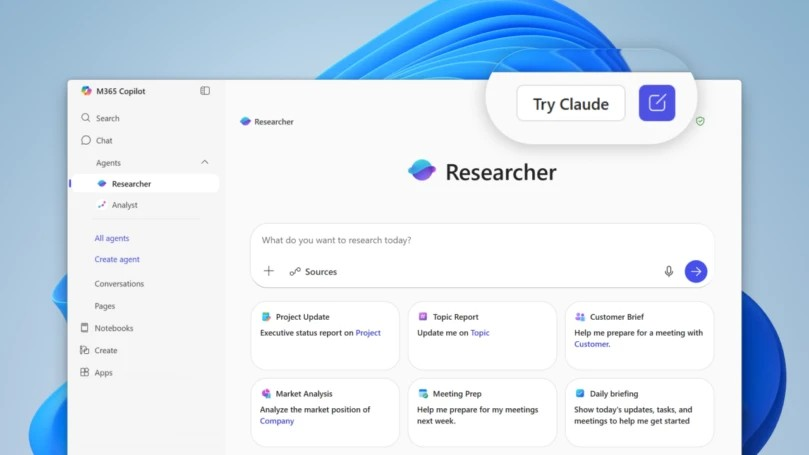
Microsoft додає можливості моделей Anthropic Claude до Microsoft 365 Copilot, розширюючи свою AI-платформу для бізнес-користувачів. Ця новина, оголошена у середу, відбувається на тлі перегляду умов партнерства між Microsoft та OpenAI, а також співпраці з іншими ключовими гравцями в технологічній індустрії.

Інтеграція Claude є відхиленням від попередньої залежності Microsoft від комбінації моделей OpenAI GPT та власної AI-технології для живлення її інструментів продуктивності. Підхід ґрунтується на «залученні найкращої AI з усієї індустрії до Copilot, налаштованої для роботи та адаптованої до кожного бізнесу», – написав генеральний директор Microsoft Сатья Наделла у допиві на X.

Раніше цього тижня OpenAI оголосила про інвестиції до 100 мільярдів доларів від Nvidia. Microsoft до цього моменту була найбільшим інвестором OpenAI. Джерело, знайоме з ситуацією, повідомило GeekWire, що Microsoft підтримала інвестиції Nvidia і не була здивована ними, незважаючи на звіт CNBC, що Microsoft було поінформовано про це лише за день до підписання.

Microsoft 365 Copilot – це AI-асистент для бізнесу, також вбудований у інструменти, такі як Word, Excel, Outlook та Teams. Він відрізняється від споживчої Copilot, доступної у Windows або Bing, з функціями для підвищення продуктивності на роботі та аналізу корпоративних даних.

Розширення Microsoft з Anthropic починається з агента Дослідника в Microsoft 365 Copilot, який тепер може працювати на моделях Claude Opus 4.1 від Anthropic, поряд з моделями OpenAI. Моделі Claude також будуть доступні в Copilot Studio, інструмент Microsoft для створення та управління кастомними AI-агентами. Раніше цього року Microsoft оголосила, що моделі Claude Code від Anthropic будуть доступні в Microsoft GitHub Copilot автономному агенту кодування, поряд з агентом Codex від OpenAI. Компанія також оголосила плани про надання Grok 3 та Grok 3 Mini, розроблених Elon Musk’s xAI, через Microsoft’s Azure AI Foundry AI platform.