Seattle Tech Roundup: Key Stories from September 21, 2025

Catch up on the latest developments in the Seattle tech scene with this week’s top stories.

  • Layoffs and National Attention: The Wall Street Journal highlighted the impact of recent layoffs in Seattle, a city significantly reliant on Microsoft and Amazon.

  • Sila’s Manufacturing Facility: Next-generation battery materials startup Sila is commencing operations at its innovative automotive-scale manufacturing facility in Washington.

  • IShowSpeed’s Seattle Appearance: A notable event involving IShowSpeed drew attention in Seattle.

  • Microfluidics Cooling System: Microsoft unveiled a revolutionary microfluidics cooling system, inspired by leaf veins and utilizing AI to optimize data center efficiency.

  • Robotics and AI Discussions: GeekWire spoke with Srinivasa regarding the state of robotics, entrepreneurial opportunities, and Seattle’s potential as a global AI and robotics hub.

  • Natural Organic Reduction Expansion: Thirteen more states have followed Washington’s lead in legalizing natural organic reduction.

  • Reserve Roastery Closure: Starbucks closed its flagship Reserve Roastery in Capitol Hill, marking the end of an era for this unique coffee experience.

  • Mariners Broadcasting Shift: The Seattle Mariners are transitioning all broadcast production, carriage, and streaming to Major League Baseball starting in 2026.

  • Video Call Scheduling: A recent discussion centered around scheduling a video conference.
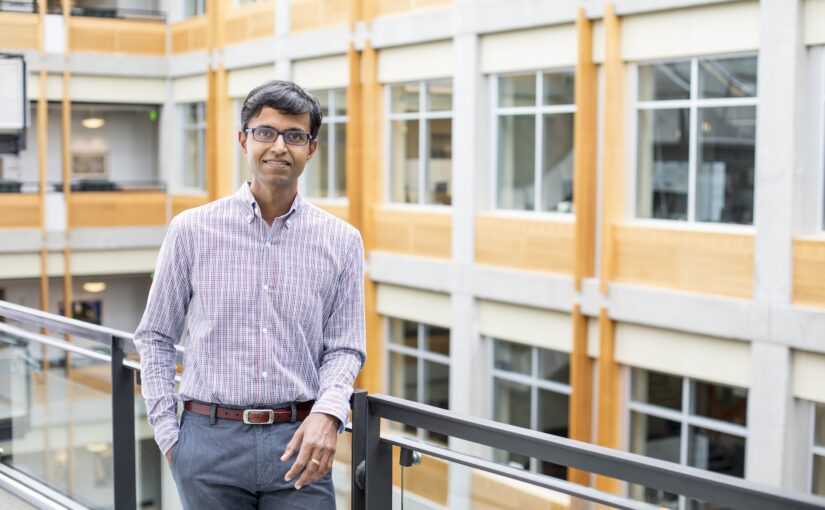
Siddhartha Srinivasa Bets on Seattle’s Robotics Future

Siddhartha “Sidd” Srinivasa, a robotics pioneer with a career spanning Berkshire Grey, Amazon, and Cruise, is now joining Madrona Venture Group as a venture partner. Srinivasa believes Seattle is poised to become a global leader in AI and robotics, driven by advancements in hardware, compute power, and foundational models. However, he highlights a key challenge: the ‘last mile problem’ – robots can handle basic tasks, but scaling to complex, real-world applications remains difficult. Srinivasa emphasizes the need for breakthroughs in generalization and adaptability in robots, suggesting alternative form factors beyond the humanoid. He identifies sectors like fulfillment, computational agriculture, and commissary kitchens as potential disruptors. Srinivasa stresses the importance of a ‘pull’ – genuine customer need – for robotics, rather than simply ‘pushing’ the technology. He also cautions against applying the software model to robotics, acknowledging the unique challenges of maintaining and servicing physical robots. Srinivasa underscores the necessity of workforce re-skilling to mitigate potential job displacement and positions Seattle as a uniquely supportive ecosystem for robotics innovation, capitalizing on strong university partnerships and a thriving venture capital landscape.